Interview with Abe Lagrimas Jr.
Open the English version. / For the English version please click here.
I first saw Abe in a YouTube video ten years ago, and I could hardly believe my eyes — or, more importantly, my ears — that such sensational jazz could come out of a ukulele. I remember thinking, “This guy is amazing.” Until a few weeks ago, though, I would never have imagined that I would one day get to interview him. Then that day arrived.
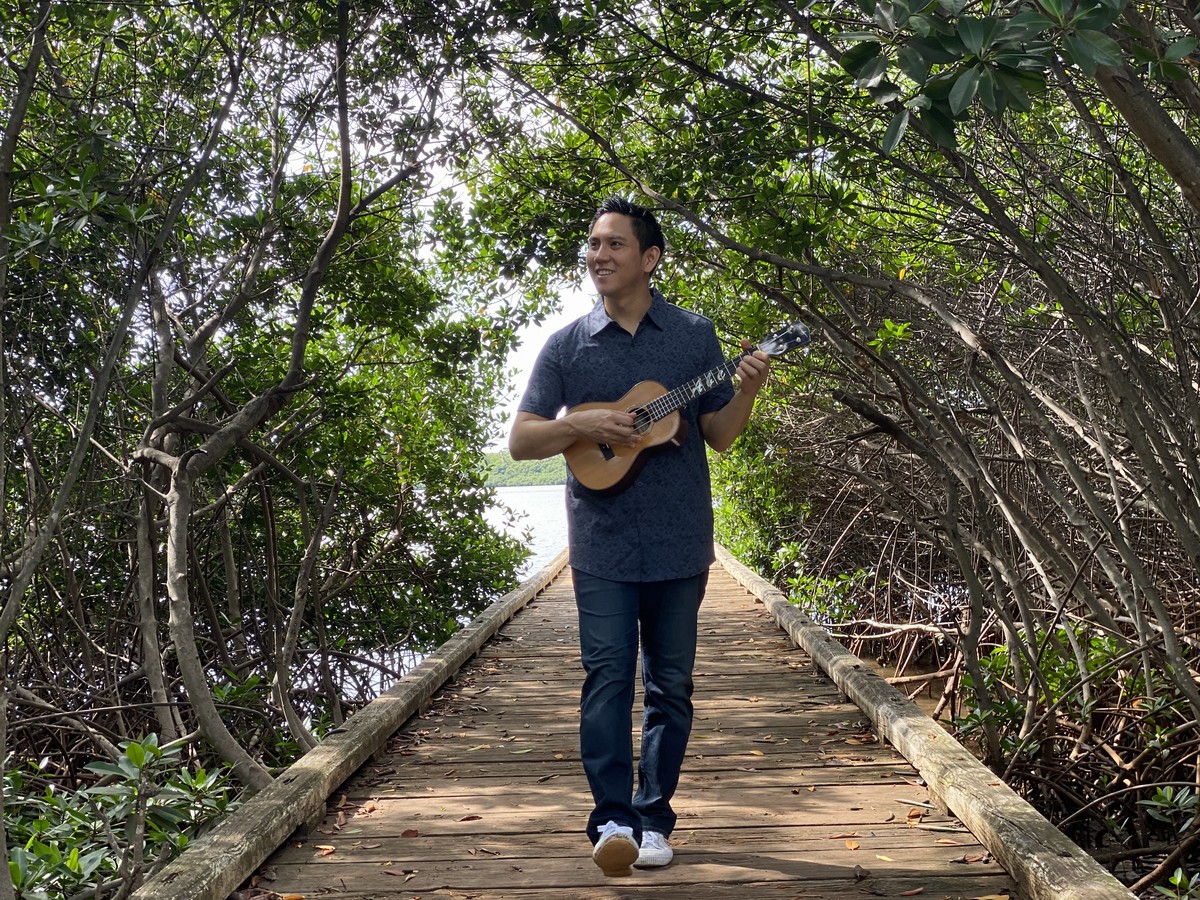
Abe's fingerstyle ukulele playing is flawless, his jazz playing is superb, and I simply cannot get enough of it. On top of that, his knowledge of music theory is exceptional. So here is the interview — I hope you enjoy it.
Could you please introduce yourself in a few words?
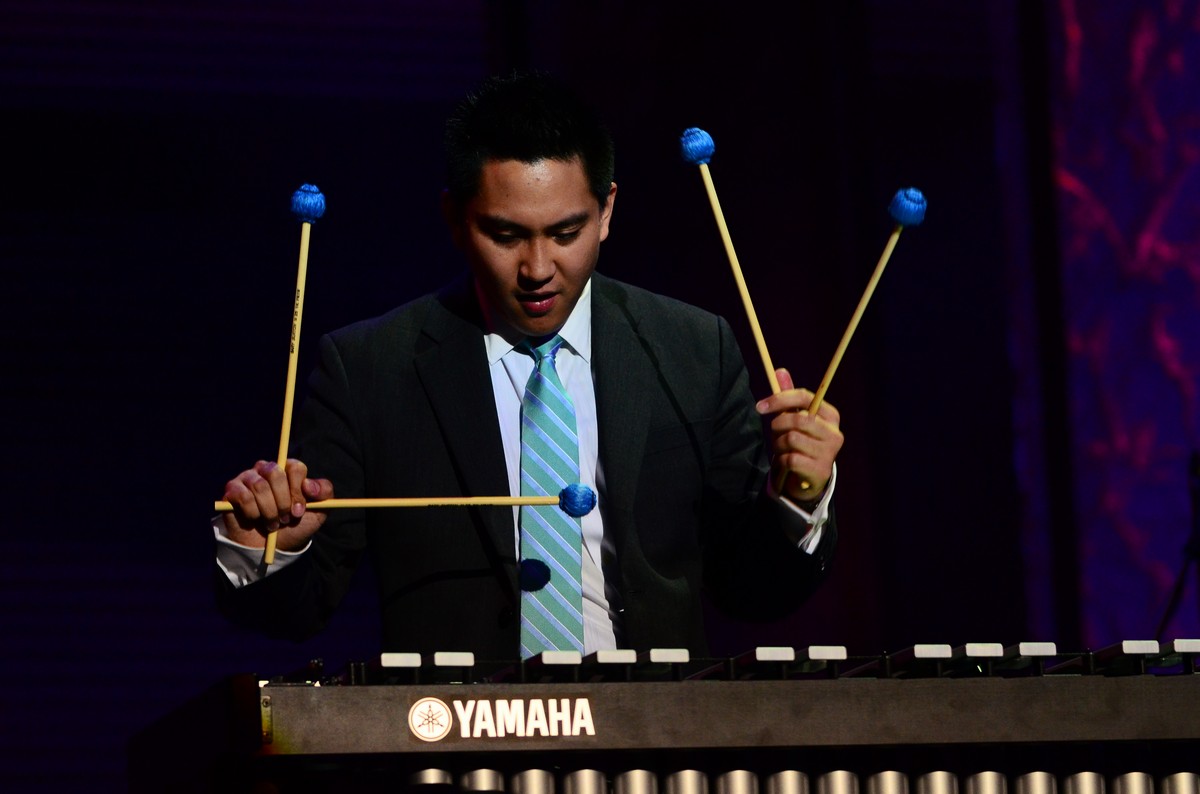
Aloha Tamás, thank you very much for the opportunity to do this interview. I am happy to introduce myself to the Hungaria ukulele community. My name is Abe Lagrimas Jr. I was born in Guam, grew up in Hawaii, and now live in Los Angeles. I earned a degree in Music Education from Berklee College of Music in Boston. I work as a musician, composer and educator. My three main instruments are drums, ukulele and vibraphone, although I play other instruments as well.
How and when did you first encounter the ukulele? What inspired you to learn to play it?
Growing up in Hawaii, I was constantly surrounded by the sound of the ukulele. I started playing ukulele in college in 2003. Although drums were my principal instrument there, one of the reasons I began playing ukulele was that it helped with homesickness.
Do you remember the first chord you learned? And which was the first one that made you think, “this is difficult”?
I do not really remember anymore, but perhaps it was C major. I already knew a few guitar chords, but when I started learning ukulele chords I found them much easier to pick up, so I continued learning on ukulele instead. In college I became completely absorbed in jazz, and jazz also became the main style I play on ukulele.
I love jazz too, and for me it is exciting to interview someone who plays jazz on the ukulele at such a high level. When and how did you first encounter jazz, and what does this music mean to you?
I came to jazz through drumming. When I was younger I listened to a great deal of rock and heavy metal. Some of my favourite bands were Metallica and Slayer, and later I also became a fan of Dream Theater. As I studied drums, my teacher — who was also my bandleader — guided me toward jazz. It took me a while to understand it, but once it clicked, I fell completely in love with it. After that, even while I was still in college, I had the opportunity to play professionally with some of Hawaii's finest jazz musicians. That was the best musical education of my life. To me, jazz gives a musician complete freedom for self-expression and for creating something unique in the moment; in my view, jazz is the genre that offers this more than any other.
Is there a piece of yours that you would describe as technically difficult?
I recently posted a video of Benny Chong's arrangement of the jazz standard “The Way You Look Tonight”. It is very difficult because chords have to be played under almost every note of the melody. The chord shapes themselves are not particularly hard to fret. What requires a lot of practice and concentration is making all the chord changes smooth and effortless while staying in tempo.
How do you practise? What do you practise? Do you have any special routine you follow?
I do not really have a fixed practice routine, but consistency is important. Recently I have mostly been practising the songs from my latest album, Beyond Words, and I also play through my older compositions so that I keep those fresh as well .
How many songs are in your repertoire? How quickly does your repertoire grow?
I do not know; I stopped counting. I mostly practise the pieces I am going to play at my next concert. The songs I choose depend on the performance. The list I have been drawing from recently is not very long — around two dozen songs.
You may not know this, but I have been a big fan of yours for about ten years. Just look at this YouTube video of yours: “Ukulele Blues” — I commented on it in 2011, 2017 and again this year . I liked that video so much that I even dedicated a separate blog post to it here on ukulele.hu in 2011, titledUkulele Blues. Could you tell us a little about that piece?
Wow, that is quite an old video. I find it a little embarrassing now, but I am glad you like it. It is an improvisation on a tune called “Blue-kulele”, and I am playing with my friend Gary Wicks, who plays a Kala U-Bass. The piece also appears on my album Rhythm & Uke.
I recently saw your video in which you play Autumn Leaves, which is one of my favourite songs. The arrangement is simply sensational: perfect chords, a great solo, and — at least to me — it looks like a fairly difficult piece. Could you tell us something about this arrangement?
Autumn Leaves was the very first jazz standard I learned on ukulele, not long after I began studying jazz on drums. Fortunately, I know the song's chords and changes quite well, and — as with other pieces — my task here was to place the melody over those chords. I try to include as much harmony as possible, although of course there are places where I play only individual notes. I enjoy the challenge of taking a song I can already play and learning to perform it in different styles and with different techniques.
As I read about you and watched your videos, I saw that you play other instruments too — not only ukulele (which you have already revealed in your answers — ed.). Which instruments are these, and which one is your favourite?
I started playing drums when I was four. I played a little guitar in elementary school, then vibraphone and piano in high school, and ukulele in college. I have been playing drums the longest, so that is my favourite instrument. Playing several instruments — piano, vibraphone and ukulele — complements each other well. On those latter instruments I can focus on melody and chord progressions, which of course is much less possible on drums.
Could you introduce your albums?
- Dimensions (2005). My first album, featuring original ukulele compositions with a full band.
- A Pass Out Records Christmas (2007). This album contains Christmas songs that I arranged for ukulele. In addition to ukulele, I play drums, vibraphone, bass guitar, keyboards and other percussion instruments. Traci Toguchi and Sherry Shaoling provide the vocals.
- Ukulele Vibes (2009). This is a “duo” album featuring only ukulele and vibraphone. I composed pieces specifically for these two instruments and I play both of them myself.
- Solo Ukulele: The King of Pop (2010). I made this album as a tribute to Michael Jackson. It features ukulele arrangements performed with my musician friends Kalei Gamiao, Jason Arimoto and Chris Salvador. That year I won a Na Hoku Hanohano Award for the album.
- Rhythm & Uke (2014). This album contains five solo ukulele arrangements and five other tracks in which the ukulele is accompanied by bass guitar and drums.
- Abe Lagrimas, Jr. (2018). Thanks to a Kickstarter campaign, I was able to spend a little more on this album, on which I reintroduced myself as a solo artist who plays several instruments. It contains sophisticated, jazz-oriented music.
- Elua: Ukulele & Slack Key Guitar (2019). This album contains five ukulele pieces and five guitar pieces, the latter played by Lance Takamiya. Every song was inspired by Hawaii and Hawaiian music.
- U3 In Waves (2020). We had a fantastic team for this album: Cynthia Lin, Lenny San Jose, aka Ukulenny, and myself. We arranged popular songs in a variety of styles. I play ukulele, vibraphone, drums and percussion, sing backing vocals, and I also arranged the songs.
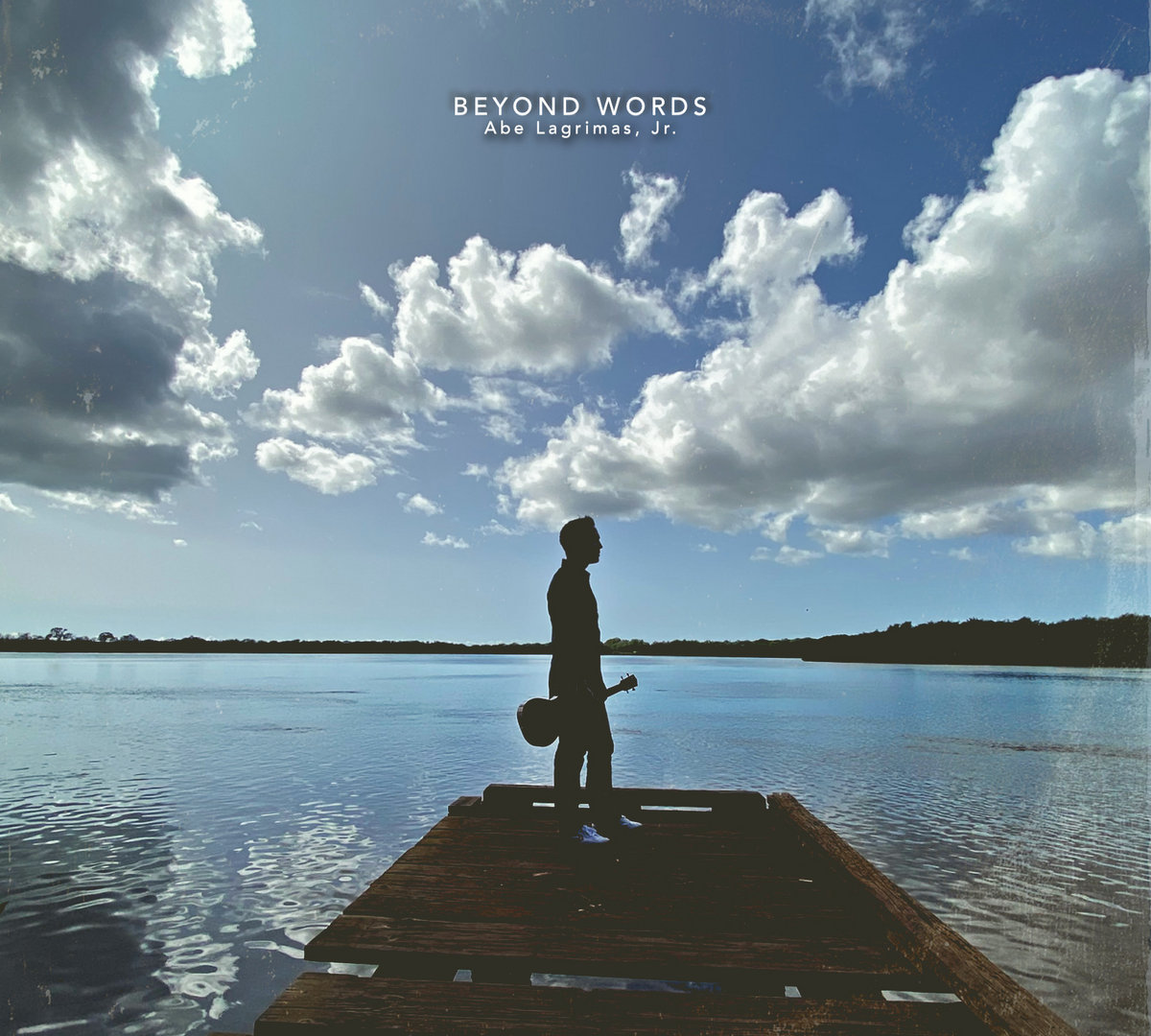
- Beyond Words (2021). This album is where ukulele and jazz meet. Several musicians contributed, but because of the pandemic the recordings were not made in the same place. I wanted to compose instrumental music for this album that would be as expressive as songs with lyrics.
Please tell us a little more about your latest album,Beyond Words!
On this album I play drums and ukulele, as well as vibraphone on two tracks, and bass guitar and keyboards on one track. Other Los Angeles-based musicians can also be heard on the recordings: Will Brahm on guitar, Sezin Ahmet Türkmenoğlu on bass and Matt Politano on piano. Finally, DeShannon Higa from Honolulu, Hawaii plays flugelhorn on one track. We recorded the album in the second half of 2020, right in the middle of the pandemic, when most studios were closed. That made it an exciting project, because every musician recorded their own parts at home using their own equipment. In other words, we never actually played or rehearsed these pieces together as a conventional band.
We have talked a lot about jazz and your albums. I am really curious: who are your favourite bands and artists from the 1950s onward?
When it comes to jazz, the 1950s and 1960s are actually my favourite period. I really love artists and groups from that era such as Miles Davis, John Coltrane, Art Blakey and the Jazz Messengers, Wayne Shorter, Herbie Hancock and others. In rock music I would obviously mention the Beatles, although Led Zeppelin may be my favourite band. I really like John Bonham's drumming. As I said earlier, I grew up listening to Metallica, Slayer and Pantera, and later Rush and Dream Theater followed. During the pandemic I began listening to more and more classical music, particularly Shostakovich. That made me want to explore other composers more deeply as well, so I have also been listening to Stravinsky, Beethoven and Mahler. Classical music is inspiring and gives me ideas. Jazz, with its freedom, provides space for self-expression, whereas in classical music I find it exciting to discover its many layers, textures, moods and harmonies. Classical music is an enormous source of musical inspiration, experience and learning.
The Hungaria ukulele community is still not very large, but I hope it will continue to grow. We are working to make the ukulele widely known in Hungary and to spread the word — the love of the ukulele and the joy of playing it. What would you say to people who are still wondering whether they should start learning the ukulele?
I think the pandemic made many people realise how important music is in life. Playing ukulele, or any other instrument, nourishes the soul in the same way that food nourishes the body. And when you make music with other people, everyone shares in that nourishment. Play ukulele, make music together, look after one another and be kind to each other — perhaps then the world will become a slightly better place too.
Thank you very much for the interview.
Thank you too !
Abe's website (with live streams as well as music and publications available for purchase): https://www.abelagrimasjr.com/
Instagram: @abelagrimasjr
Facebook: https://www.facebook.com/abelagrimasjrmusic/
YouTube: https://www.youtube.com/abelagrimasjr