How to choose a ukulele
Practical guidance on size, budget, materials and the questions worth considering before you choose an instrument.
Dear Visitor, please allow me to introduce myself briefly. My name is Tamás Gáll, founder of the Hungarian Ukulele Blog and editor-in-chief of Ukulele Hungary. Since autumn 2022 I have also been a KALA ukulele ambassador. You can read my longer introduction here. Over more than a decade I have had the chance to try a great many ukuleles and to help many music lovers choose an instrument. Through my courses and individual lessons, I have also helped a growing number of people take their first steps in learning the ukulele.
There is now a very wide range of ukuleles available, and it is easy to get lost in the choice, especially as a beginner. I therefore put together this guide to go through the most important points to consider.
Before buying, it is worth taking some time to think through these questions before saying, “Yes, this is the instrument I want.” The final decision is of course yours, but I hope these tips and suggestions will make it easier to find your way among the many ukuleles available.
Your budget will obviously influence the choice, but it is worth first clarifying who the instrument is for, what level they play at, and what size, construction or equipment will actually be comfortable and suitable for them.
Who am I buying the ukulele for? What is my playing level — or the level of the person I am buying it for?
For myself as a complete beginner — “I don’t have a ukulele yet”
Think about why you want to buy a ukulele and how long you expect to use it. If the idea of buying one came suddenly and you are not yet sure whether you will keep playing in the long term — in other words, you are approaching ukulele learning more as an experiment — then choose an entry-level instrument in the region of HUF 25,000–30,000. If you are planning for the longer term and are sufficiently determined, it is worth investing in a somewhat better-quality — and therefore more expensive — instrument. Once you are past the initial difficulties, you will be less likely to run into the limitations of the instrument and can keep using your first ukulele for a long time. I recommend choosing a wooden instrument.
Buying a Ukulele
Tamás GállUkuleles can be bought from as little as HUF 2,000–3,000, while top models can cost several hundred thousand forints and may even exceed one million forints. First of all, I would strongly advise everyone against the ukuleles that cost only a few thousand forints, unless what you want is a dust coll…
Read moreFor myself as a more experienced player — “I already have a ukulele”
You have probably become familiar with your current instrument and know its possible limitations, or perhaps you simply want to try something different. If you have been playing a soprano, it may be worth trying a concert or tenor. You might want an electro-acoustic model alongside your acoustic one, a solid-wood instrument instead of a laminate one, or perhaps even a resonator ukulele. As a more experienced player, take the time to compare the exact specifications of different instruments. If you need further help, I can also assist you by e-mail.
As a gift for an adult who is a complete beginner
Make sure the recipient is interested in learning music and will genuinely be happy to receive a ukulele; otherwise the gift may end up as a fairly expensive dust collector. The fact that it is a present is not a good reason to buy the cheapest plastic ukulele you happen to come across. Even if the recipient is delighted at first, a few weeks later they may become frustrated if the instrument does not behave as expected. I recommend choosing a wooden instrument. The same considerations otherwise apply as in the section above about buying a first ukulele for yourself.
As a gift for an adult who is not a beginner
Most ukulele players already have some idea of what kind of instrument they would like to own next. It is better to find out what that is, because then you have a much better chance of giving them something they genuinely want. If you are not familiar with ukuleles, it is easy to choose the wrong instrument — the wrong brand, wood, size or colour — compared with what the recipient had in mind.
As a gift for a child
For a child under about six or seven, it often makes little difference which ukulele you buy, because they are likely to regard it as a toy rather than as an instrument. The younger the child, the greater the chance that the ukulele will simply end up among the other toys. The fact that the instrument itself is small does not mean that a very young child will be able to play it. Playing an instrument requires concentration and persistent practice, which we cannot reasonably expect from a very small child. A much better and more useful approach is often to buy a ukulele for yourself and play music for your child; when they reach the right age — and perhaps start imitating you — they can begin their own musical journey.

Buying a Ukulele for a Young Child
Tamás GállI receive a great many emails from parents asking what kind of ukulele they should choose for their child. I have already written a post about buying a ukulele “for adults” but in view of the many messages I receive, I will now try to summarise what I think is worth considering when choosing a ukule…
Read moreAbout a beginner ukulele set
A beginner ukulele set consists of the ukulele, a case or gig bag, a tuner and, optionally, a shoulder strap. You can of course buy just the ukulele, but I strongly recommend getting a case as well for safe transport and storage. A tuner can be replaced by a phone app, but those apps can be difficult to use in noisy surroundings. A clip-on tuner costing only a few thousand forints works reliably even in noise and takes just a moment to attach, while a phone app can sometimes involve fiddling with settings, pop-up advertisements or operating modes.
Buying a strap is not essential, and not every ukulele has a strap button. Depending on the manufacturer, instruments may be supplied with or without one. You can read more about straps and tuners in the related blog posts below.

With a strap or without?
Tamás GállOne of the eternal questions among ukulele players is whether you may, can, should, ought to — and so on — attach a strap to a ukulele. There may be no single correct answer, and that is perfectly fine: everyone can decide how they prefer to hold their instrument. The earliest ukuleles had no strap…
Read more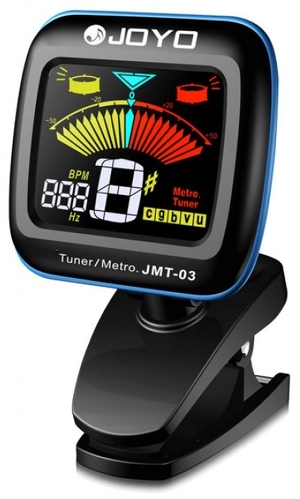
The tuner
Tamás GállIn the next video I show you four tuners. In the age of smartphones, many people may consider buying a tuner unnecessary, and that is partly true: a ukulele can be tuned perfectly well with a phone app. Even so, a dedicated tuner has its advantages, so perhaps it is not a bad idea to keep one of the…
Read moreChoosing the right ukulele size
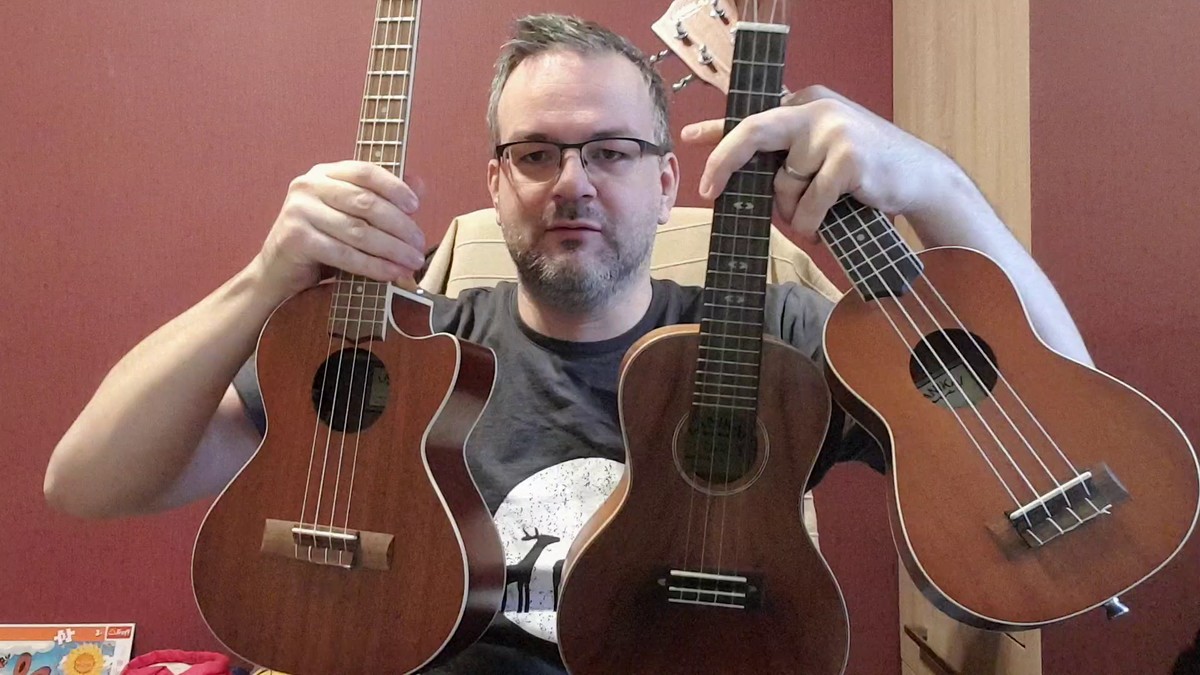
When choosing a ukulele, you also need to decide what size to buy. Ukuleles are generally made in four main sizes: soprano, concert, tenor and baritone. This is also their order from smallest to largest. A soprano can feel uncomfortable for a beginner with larger hands, in which case a concert or tenor may be a better choice. With smaller hands, however, a soprano may be perfectly comfortable. Finger and palm size are not the only factors: the size of your whole arm in relation to the body of the ukulele also matters, especially if the instrument is played without a strap. Whenever possible, it is worth holding and trying several sizes before buying.
Soprano, Concert or Tenor?
Tamás GállA minor religious war is slowly developing on both Hungarian and international forums over whether a beginner should choose a soprano or a concert ukulele as their first instrument. Or perhaps a tenor. I decided to make a blog post and video about the subject, explaining and showing in detail where…
Read moreFinally, the appearance of the instrument also matters
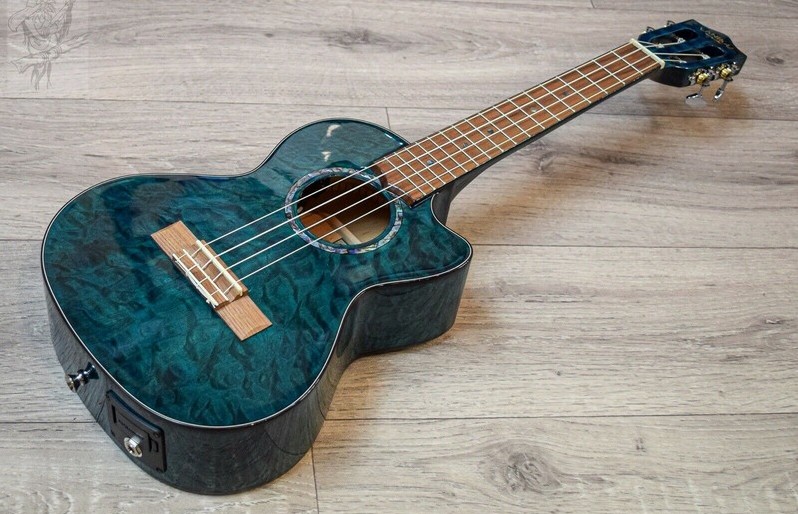
Different manufacturers use a wide range of woods, decorations and colours to make their ukuleles attractive. Before choosing, it is worth looking at as many photos and demonstration videos as possible so that you can examine the appearance carefully as well. On some ukuleles, the natural grain of the wood provides the visual pattern; other models are stained, painted or decorated with laser engraving. The shape of the headstock, the tuning machines, the fingerboard, position markers and a gloss or satin finish can all make a substantial difference to the look. Sound and playability come first, but it also matters that you enjoy looking at your instrument.
Which ukulele brands do I recommend?
I have been fortunate enough to try a great many ukuleles. It is difficult to make a general recommendation, because taste and budget have a major influence on which brand is right for someone. If I had to single out two, I would mention Kala and Lanikai. My very first ukulele was a Lanikai, and I still own it.
I have been testing Kala ukuleles since 2012 and have owned several Kala instruments myself. In autumn 2022 I became a Kala ukulele ambassador, so I think it is important to state that relationship clearly. My recommendation is nevertheless based on many years of experience. Kala instruments are generally not in the very cheapest entry-level category.
Based on recent years of experience, Flight and Baton Rouge ukuleles are also very popular, and many players choose Cascha instruments as well.
All of this is, of course, a subjective opinion and does not mean that other manufacturers do not make good instruments. Before choosing, it is worth trying several ukuleles in person and also looking through the instrument reviews on the blog.