
With a strap or without?
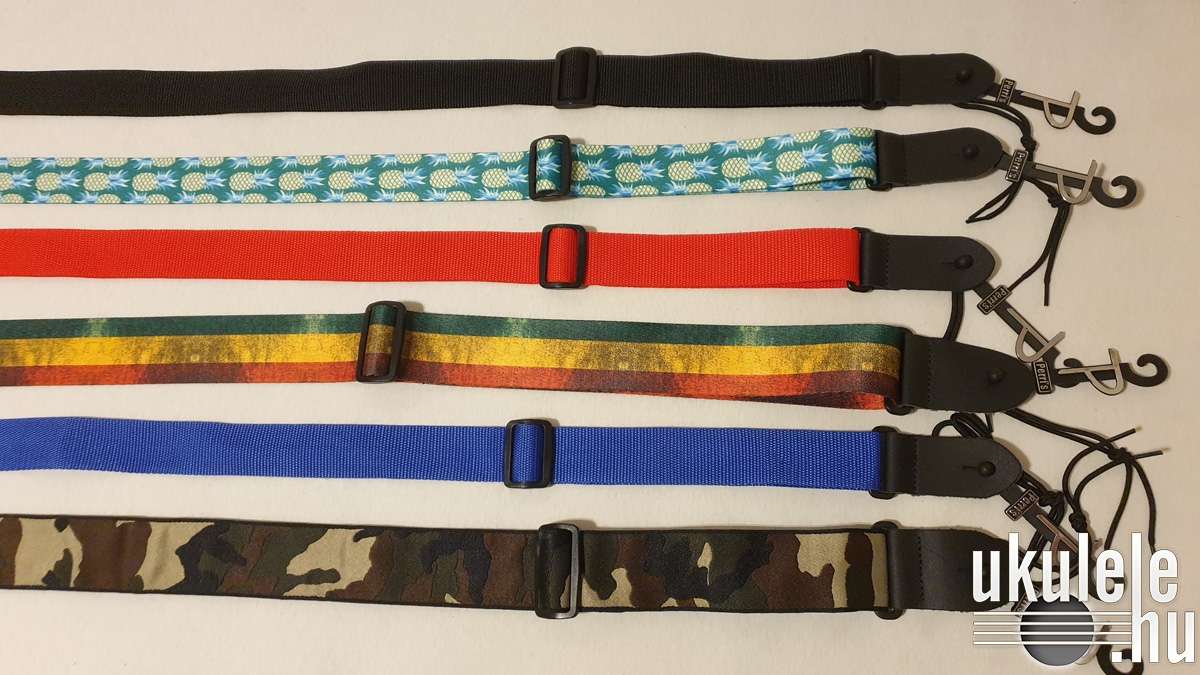
One of the eternal questions among ukulele players is whether you may, can, should, ought to — and so on — attach a strap to a ukulele. There may be no single correct answer, and that is perfectly fine: everyone can decide how they prefer to hold their instrument. The earliest ukuleles had no strap buttons, and that remained the norm for a very long time. I do not have precise information about when manufacturers began fitting ukuleles with strap buttons, but it may not even have been common around 2010. If I am not mistaken, some manufacturers only started shipping instruments with one or two factory-installed strap buttons in the last few years.
Of course, some manufacturers remain faithful to tradition and still ship their ukuleles without strap buttons. If you choose one of those instruments but want to use a strap, you need an alternative solution: for example a special strap that hooks into the sound hole, or having one or more strap buttons installed by a skilled instrument repairer. I have, you might say, fairly extensive experience of all this. For five or six years I played only strapless ukuleles. Then I got an instrument on which I later had one strap button installed, and I also own ukuleles that came with two buttons from the factory. I think that more or less covers all the variations .
One could write pages about straps, but I will try to summarise the most important points briefly; I have made a relatively long video about the subject anyway. As I wrote above, the world's first ukuleles — and ukuleles for a very long time afterwards — had no straps, so a strap is clearly not part of the traditional ukulele-holding technique. That is why I encourage my students to learn how to hold a ukulele without one and experiment until they get the feel for it. This is one of the interesting discoveries at the beginning of learning the instrument, and after a week or two of practice, hopefully we can hold the ukulele so naturally against the body that it no longer feels as though it might fall out of our hands.
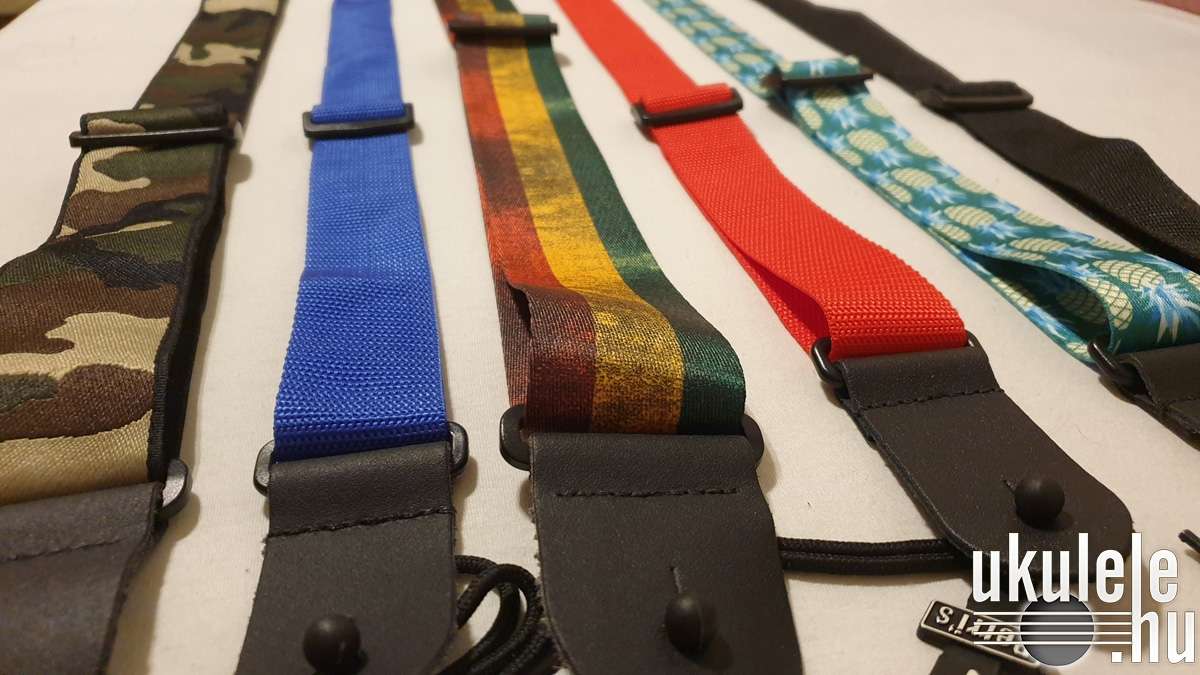
The purpose of correct ukulele posture is to allow the fretting hand to move freely. We should not use that hand to support the neck, because doing so gets in the way of chord changes. A strap solves that problem: a ukulele hanging from a strap over the shoulder will not fall, so both hands can be completely free. Naturally, the strumming arm still needs to hold the body against us to some extent so the instrument does not swing around, but the fretting hand can genuinely move without supporting the instrument. The point is that with a strap you can play comfortably in almost any position — sitting, standing, lying down . Without a strap, however, it is generally easiest to play while seated, because that allows us to hold the ukulele against the body while keeping the fretting hand free.
I could write twice as much again about the strap question — for example about professional players who perform standing up without one — but I will not bore you with it. Instead, watch the video, where I try to explain and demonstrate a few more things about straps. Even there I could not cover absolutely everything.