The Champs – Tequila
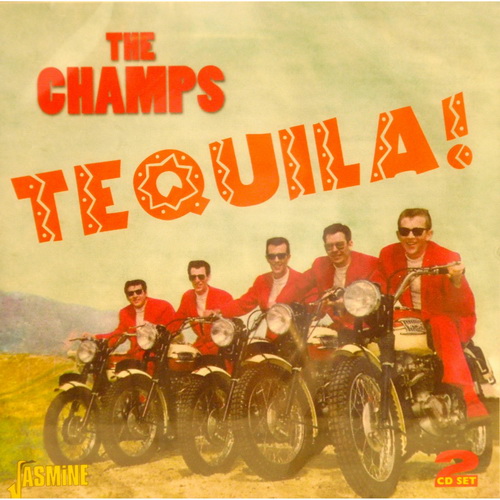
I think everyone knows this oldie. Thanks to its easy-to-remember lyrics, we do not have to spend much time memorising lines: one emphatic shout of “Tequila!” takes care of the “singing”. The song – recorded by The Champs in 1958 and rewarded with a Grammy in 1959 – is simplicity itself, yet that primitive charm contains the secret ingredient that made it famous around the world. I think it is worth learning on ukulele, because in anythoroughly drunkengroup of friends it can be a huge success, and for the reasons above it will not be difficult to persuade everyone to sing along.
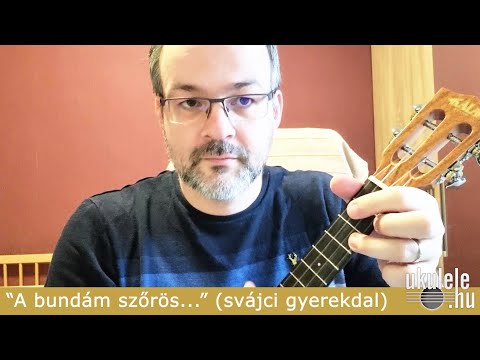
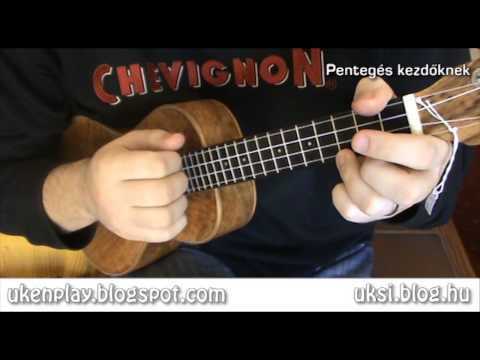
Things are not quite that easy, though. In fact, if we play the song for long enough we risk cramp in the palm and fingers, because the verses have to be played entirely with barre chords. As you can see in the video, you need to alternate between F major and E-flat major while keeping essentially the same hand position, and that can become very tiring. No problem if you want to strengthen your barre muscles a little: all you need to do is drink tequila – play Tequila. The basic idea of a barre chord is that the index finger presses all four strings at once at a particular fret, leaving the other three fingers free to fret the remaining notes of the chord. I may havewritten about this before, and perhaps I will again. So here is the video:
I admit it took quite a few attempts before I got a usable recording. My own hand became a little tired too, and after sliding the barre position back and forth so many times my fingers became rather stiff, which is especially noticeable toward the end.
In the next video I show you how to play it, because as if having your hand seize up from all those barre chords after half a minute were not enough, you also need to pay very close attention to the rhythm:
One small detail: as you can see in the videos, I fret the chords fairly high up the neck. A soprano ukulele may not have enough frets for this, so players with larger instruments have the advantage this time! Soprano players can use the basic chord positions instead, although the result may not sound quite as good. Have fun practising, and good luck with the hand-strengthening exercises.