Baton Rouge V4-TCE
This tenor beauty has a special place in my heart, although I can immediately name one negative: it is no longer an entry-level ukulele, so you have to pay more if you want to make yourself happy with one. In return, however, you get an unusually beautiful creature and the thickest-bodied ukulele I have tried or seen. The first time I held it, I immediately felt that this was a solid, substantial instrument. At first glance it almost looks as though it had been cut and carved from an old tree trunk. The sunburst motif may already be familiar from the earlier post in which we tried its smaller sibling, the Baton Rouge V2-Sun. If I am seeing it correctly, I think the pattern around the sound hole was finished using a different technique from the soprano model, because the edges of the rays are slightly softer. It almost looks like worn wood, strengthening the impression that the entire body of this excellent little instrument was carved from one block of timber – although of course it was not:
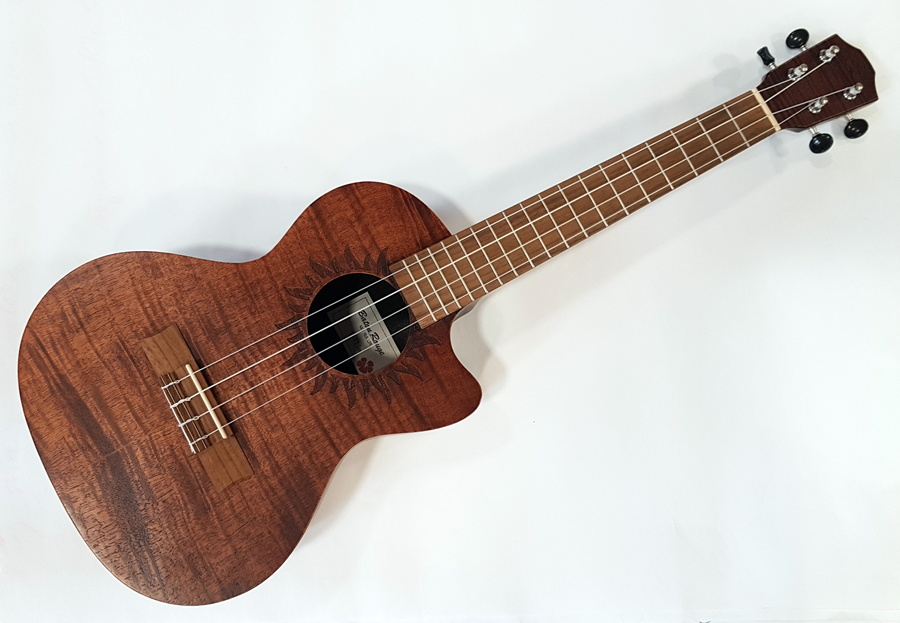
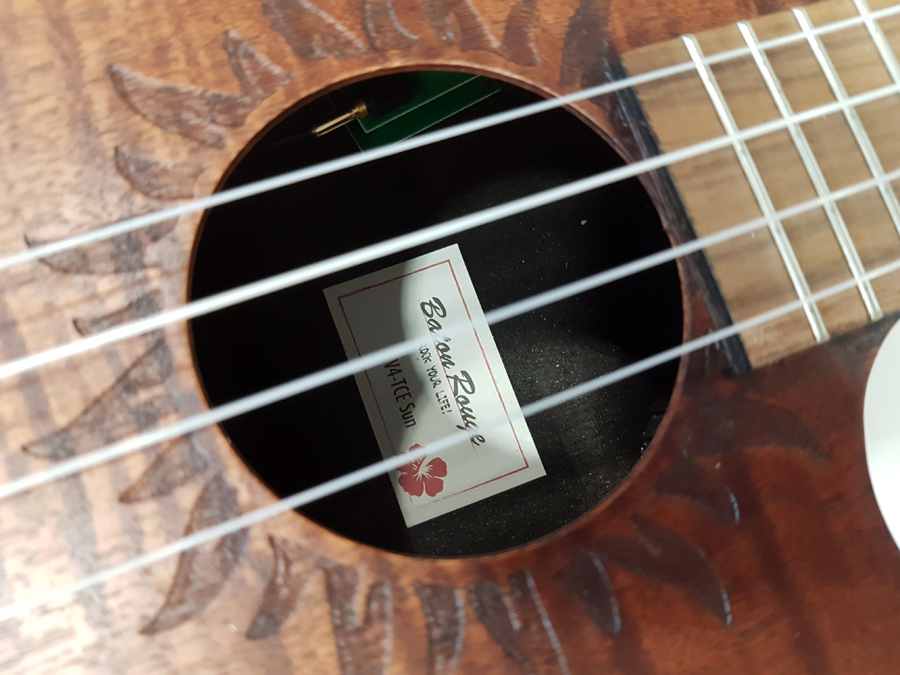
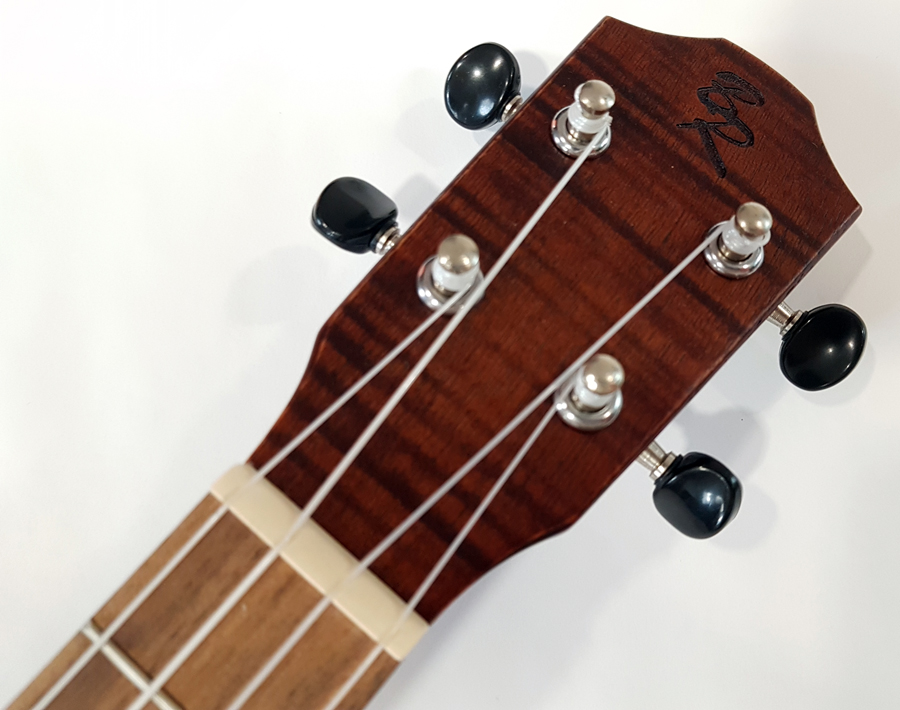
The back of the ukulele is arched, a common feature of Baton Rouge instruments. The body is made from exotic mahogany and the fingerboard from walnut, creating a striking contrast between the body and the fingerboard. The tuning machines still feel a little tight to me – although perhaps they will loosen with use – just as I found on other Baton Rouge models.
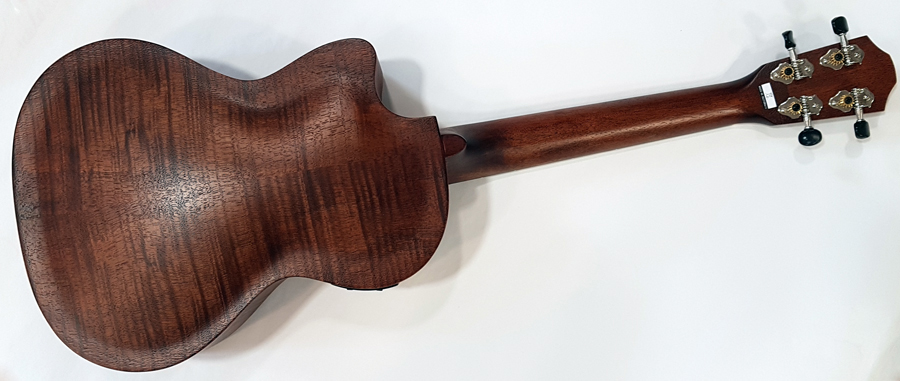
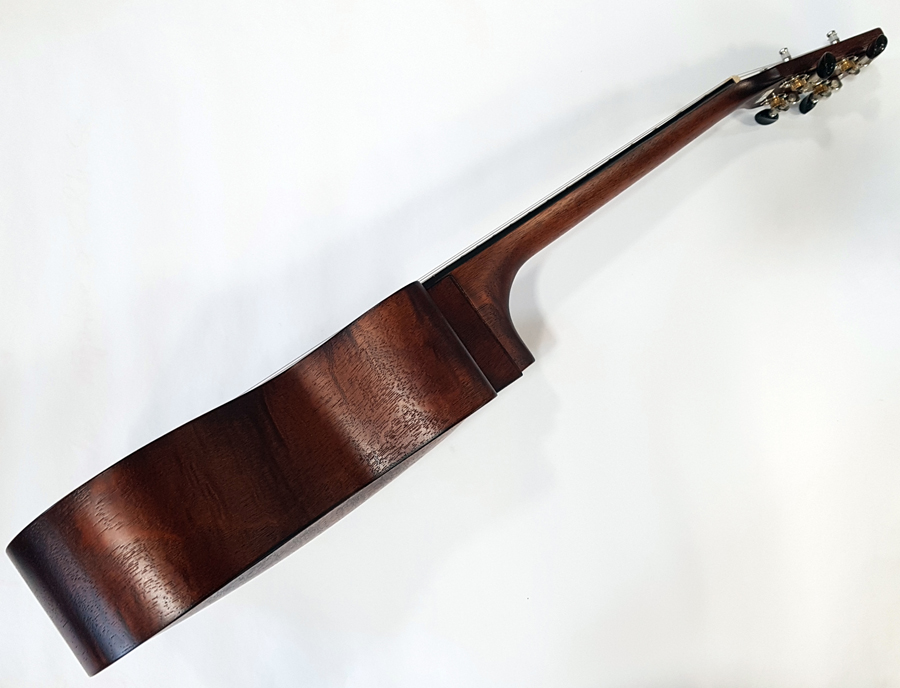
The large body also takes some getting used to in terms of handling and playing position. Naturally this also depends on what clothes you are wearing and how easily the little creature can be tamed, but I noticed that I had to adjust it several times because I felt as though it were slipping out of my hands or sliding off my lap. I therefore changed my posture slightly and held the instrument more securely against my body, after which I could play without any difficulty.
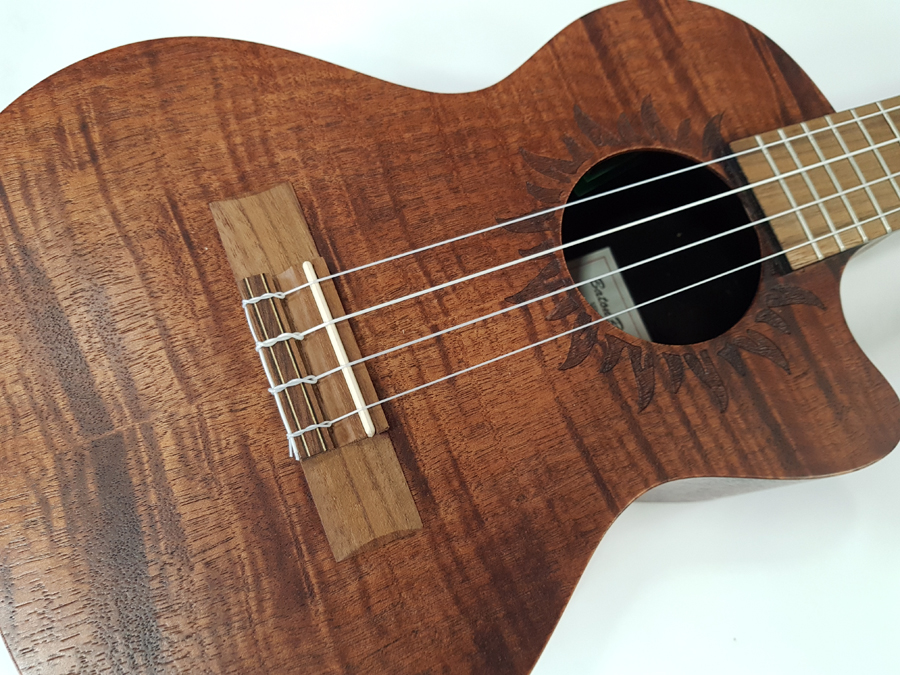
As you can see in the photos, this is a cutaway instrument fitted with electronics. I cannot say a great deal about the electronics: they work and do their job. Some players may miss having a built-in tuner, however. I assume the instrument would be more expensive with electronics that included a small display and tuner.
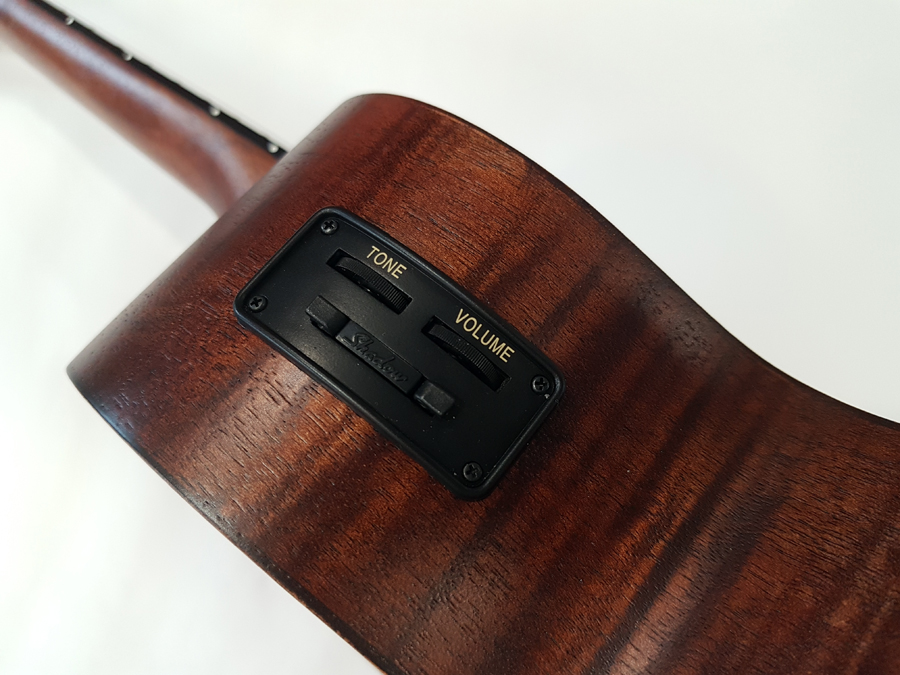
Connected to an amplifier, the instrument sounded good. The Tone control also genuinely works rather than being merely decorative; turning it makes a substantial difference to the tone. So let us see and hear how the little one sounded:
At the end of each ukulele review I usually write a few concluding thoughts, and I am in a slight difficulty because, regardless of brand, I have tried so many good little ukuleles over the past few months that I keep finding myself saying similar things. In this case we obviously cannot ignore the price. Anyone choosing an instrument like this is almost certainly planning for the longer term rather than buying the model on a sudden impulse. On the other hand, the investment pays off: you certainly will not meet this ukulele on every street corner, and the extra-large body also gives it a fuller sound without amplification – as far as that description can reasonably be applied to a ukulele. I can therefore recommend this instrument to our readers with a clear conscience despite the slightly tight tuning machines. Oh, and one more thing: this model is also produced in a factory-made left-handed version. The cutaway makes that particularly sensible, although not every cutaway instrument is available left-handed.