Why use a capo?
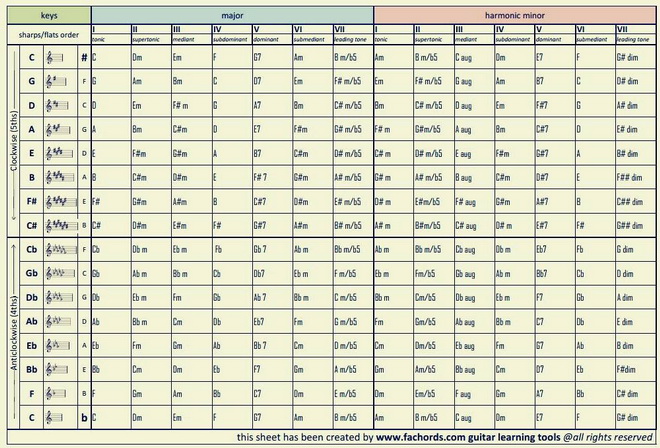
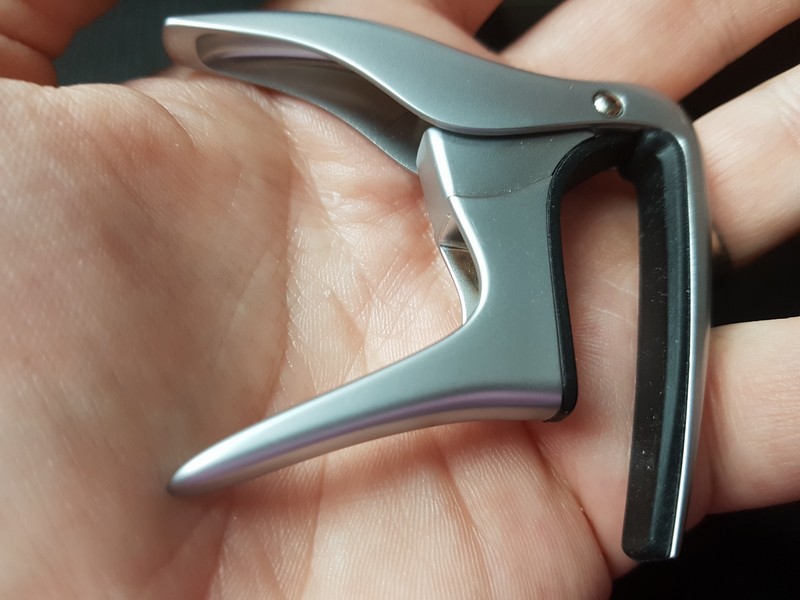
The main purpose of a capo is to change the ukulele's effective tuning in a single movement. Clip it onto the neck and every string immediately sounds higher. This is useful because if we have learned a particular chord progression or song accompaniment – perhaps one involving complicated finger movements – and want to play it in another key, we do not have to rebuild the entire song from scratch in the new key. With the capo in place, we can use exactly the familiar chord shapes we already know.
For simplicity, let us use the example shown in the following video. The song In My Life was originally written in A major, while I arranged it in G major. That simply means I play the song a major second – two frets – below the original recording. What can I do if I nevertheless want to play this excellent little song in its original key? I have two choices. The first is to rebuild and rearrange everything from the beginning, which is difficult and time-consuming because I literally have to work out the fingerings, melody, connecting passages and everything else needed for the solo-ukulele arrangement from zero. Just think about the difference between A major and G major: where on the ukulele do we fret them, and where do our fingers go?


And so on: every other chord used in the G-major arrangement would also have to be replaced by a chord a major second higher. In other words, all the hand positions, finger positions and movements I had learned for the G-major arrangement would have to change if I wanted to transpose it into A major. This is where the second solution comes in: the capo. Each fret raises the effective tuning by a semitone. If I place the capo at the second fret, I can play the song in A major using exactly the same hand positions I already learned for the G-major arrangement. Put another way, if I fret the G-major shape (0 2 3 2) while the capo is on the second fret, what we actually hear is an A-major chord. And the same is true for every chord: the D-major shape (2 2 2 0) now sounds as E major. Naturally the capo changes the precise voicing of the chords too. An A-major chord played as 2 1 0 0 without a capo does not sound exactly the same as the 0 2 3 2 shape played with a capo at the second fret. That is not a problem; in fact we have achieved exactly what we wanted. Finger movements learned and reinforced over weeks or months can remain completely unchanged while the song sounds in the desired higher key.
Although the capo is useful, we should not allow it to make either our brain or our hands lazy. It is still worth practising transpositionwithout a capo. But definitely keep one in your ukulele case, because it can be useful at any time: for playing with other people, for practice, or for instantly moving more complicated material into another key.