Trying a Baritone Ukulele
Whenever I write a blog post about a ukulele I have tested, I usually use the brand and model designation as the title. That would have been difficult this time, because a fantastically beautiful custom-built baritone ukulele stayed with me for a few days. Apart from its unusual body shape, one of its distinctive features is the leaf motif at the top of the headstock. But let us not get ahead of ourselves!
Not long ago I received an email from Levente Késmárky, who told me that he had built two baritone ukuleles and would be happy to show them to Hungaria ukulele players. He asked how we might do that. In my mind's eye I immediately saw the blog post about those two baritone ukuleles — which, as it happens, you are reading right now. Levente and I arranged the details, and a few days later I was able to try both instruments in the gently warming embrace of the farewell rays of the setting sun . (Those last few words are strong contenders for the most sentimental phrase ever to appear on this blog .) A longer post follows with plenty of information, photos and video. I hope you enjoy it .
First, let me introduce Levente with the two ukuleles he built:
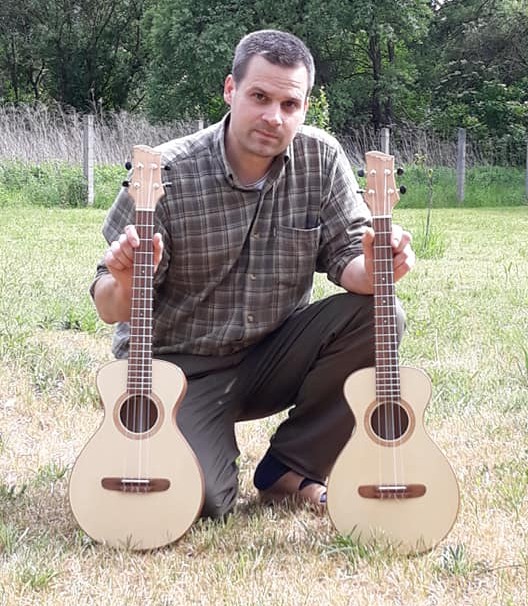
You may know that first impressions matter a great deal to me when I meet an instrument. I think many people feel the same way, because an instrument may stay with us for a very long time, and if we do not like it at first sight, it is unlikely to grow on us later. With a custom-built instrument, those first few touches and first chords are especially exciting.
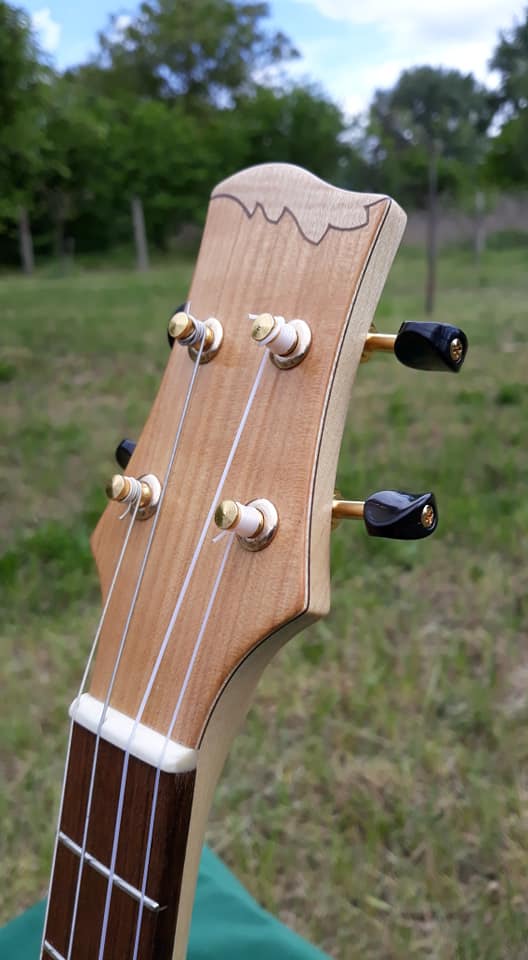
Needless to say, these two baritone ukuleles immediately won me over. I am not an instrument maker, but I think it would be difficult to find much to "pick on" in these instruments — apart from picking the chords, of course . Alongside their tasteful, well-crafted, beautifully decorated yet completely unshowy appearance, they have tremendous volume. From the sound alone, you could easily believe you were hearing a guitar.
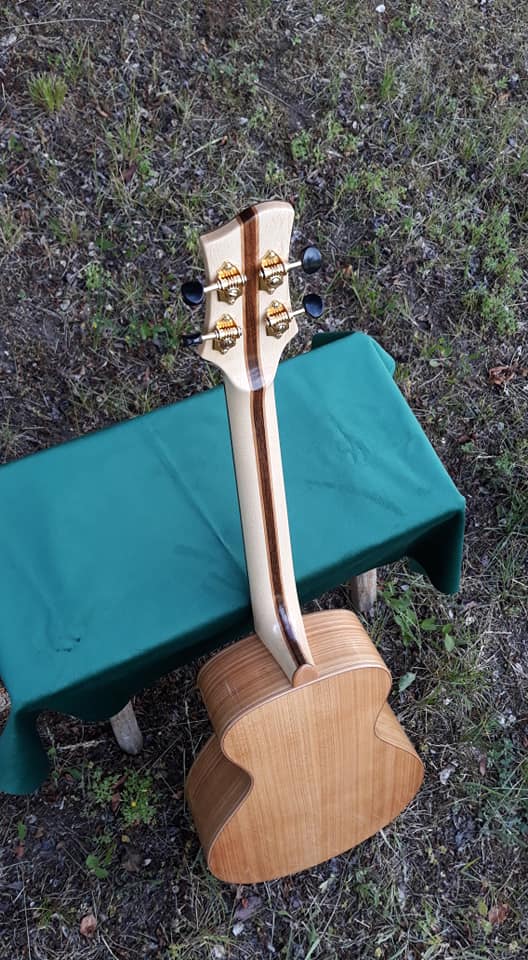
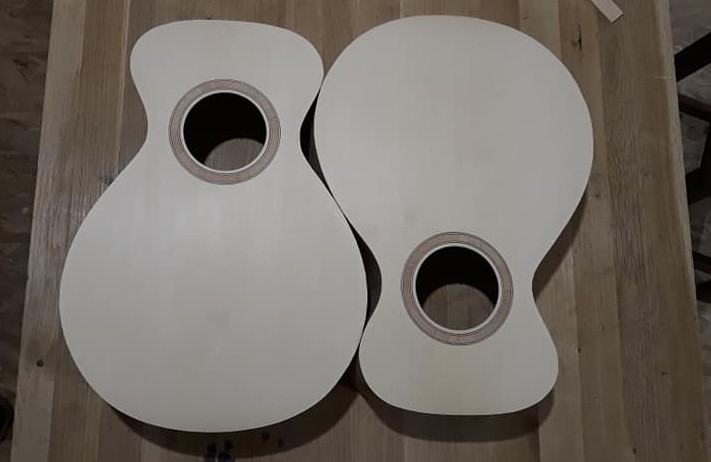
You have probably noticed that the body's shape does not follow the usual baritone outline. At the top it has what you might call a wasp waist, followed below by a rather generous "rear end". It is genuinely comfortable to play because the larger ukulele body is easy to hold against yourself, and the smoothly sanded and polished surfaces are a pleasure to touch.
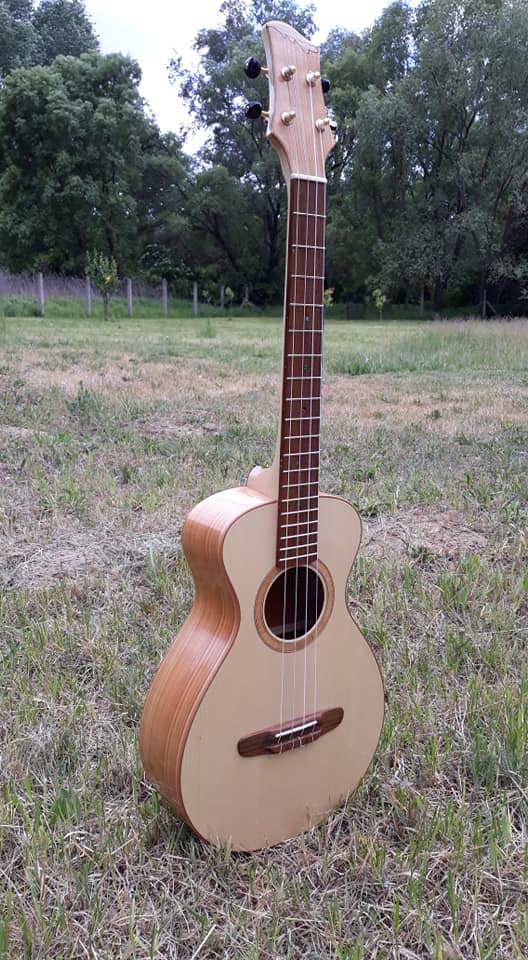
The fretwork is perfect. It felt good to run my fingers along the fret ends: there was no cutting or scratching at all. That is how it should be.
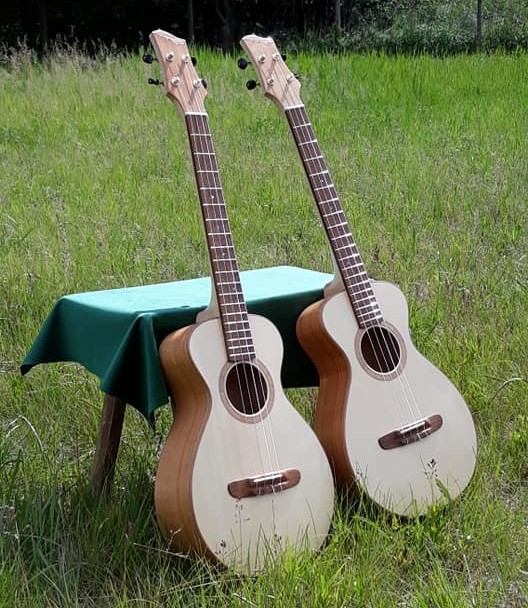
Here and there, tasteful decorative strips and wooden inlays have been added. The neck really is beautiful...
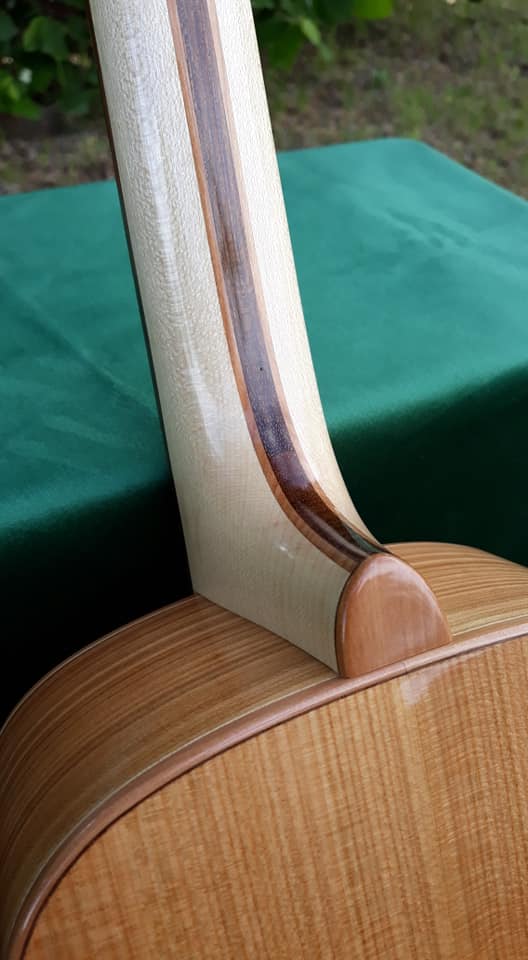
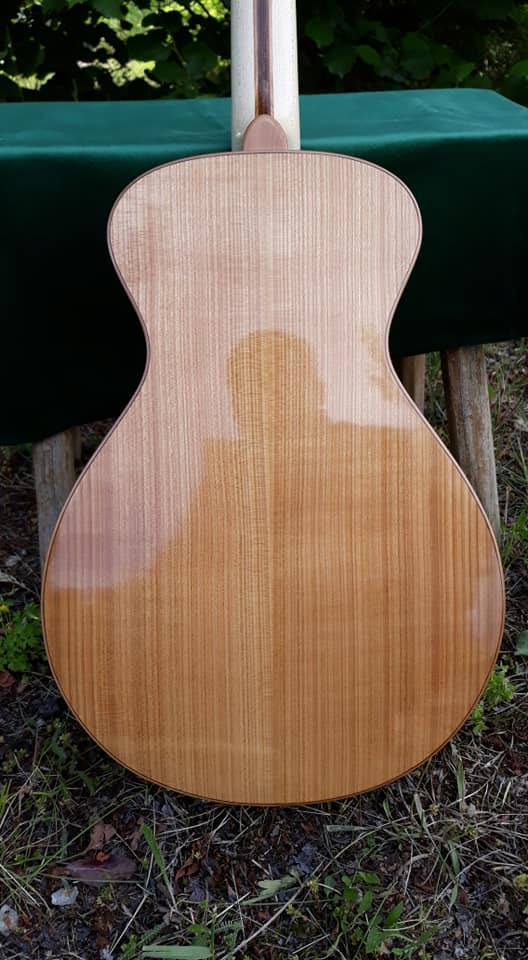
...and so is the back. Every part of the ukulele shows that its maker built it with heart and soul, and a wonderful instrument — or rather two of them — came out of his hands.
I wrote Levente a list of questions about building the ukuleles, and this is what he shared with us:
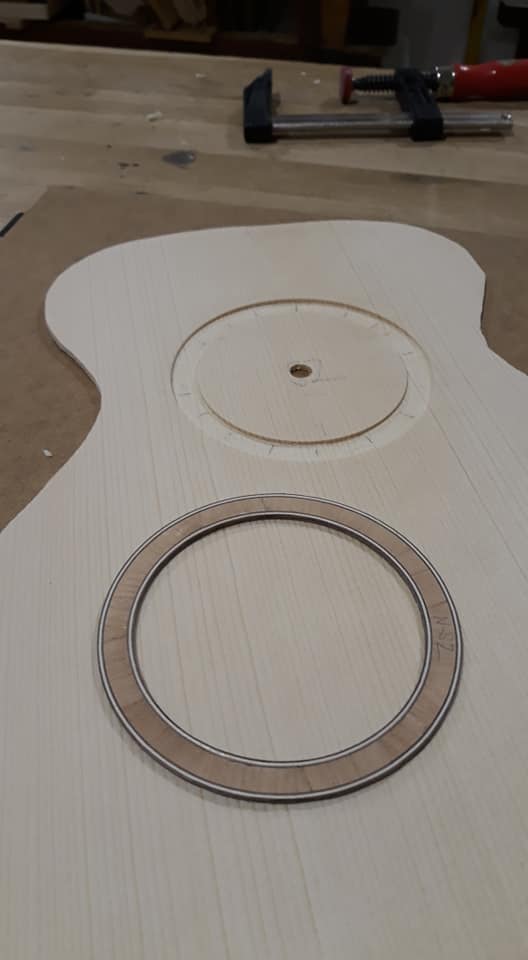
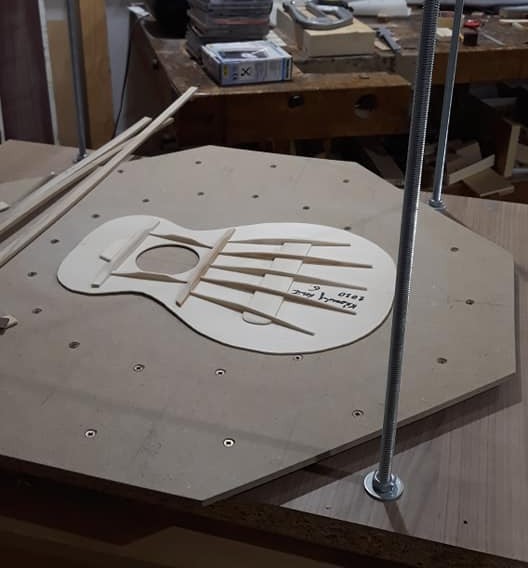
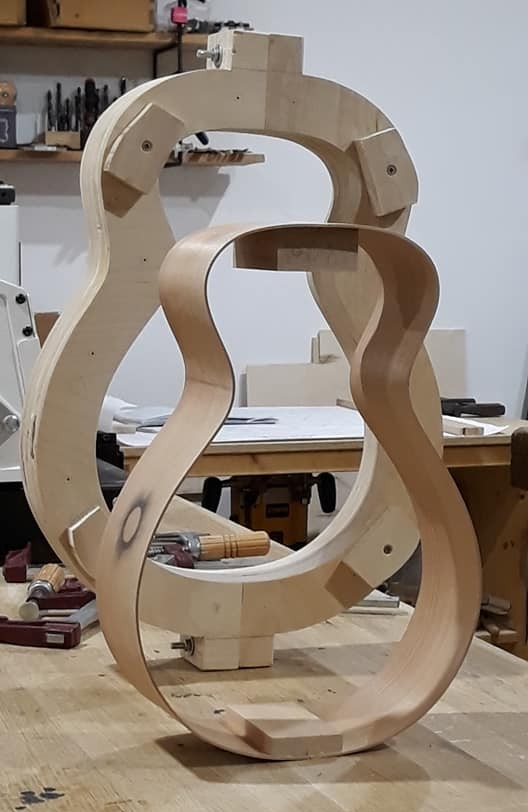
"I had been interested in building classical guitars, and while looking into that I came across ukulele plans. Since there are many similarities, I decided to start by making these. One piece of soundboard material happened to be large enough for two baritone ukuleles, and because the surface area of a single instrument is rather small for French polishing, I eventually decided to build two. An interesting detail is that the bracing differs between the two instruments: one uses traditional ukulele bracing, while the other is more guitar-like. I used wild cherry for the back and sides, spruce for the soundboard, maple with a hardwood insert for the neck, and cherry again for the headstock veneer. The fingerboard and bridge are ovangkol. The scale length is 506 mm. At the end of January I cut up the cherry boards and selected the pieces suitable for instrument making. Then came bending the sides, bracing the back and soundboard, closing the body, binding it and shaping the neck. It takes me about a month to reach the finishing stage. I use French polish, applying successive coats with generous drying time between them. After that the neck and bridge are fitted, followed by the tuners and strings. I have grown very fond of this little instrument and would gladly build ukuleles in other sizes too. I would make the body components from the same kind of wood — in other words, instead of spruce I would use a hardwood soundboard, which is closer to traditional ukulele construction. I can adapt the instruments I make to the user's requirements to some extent, with the exception of installing electronics."
Many thanks to Levente for the detailed explanation, and I sincerely hope many more ukuleles will come out of his workshop!
Returning to the two baritone ukuleles, here are also some pictures from different stages of the building process:
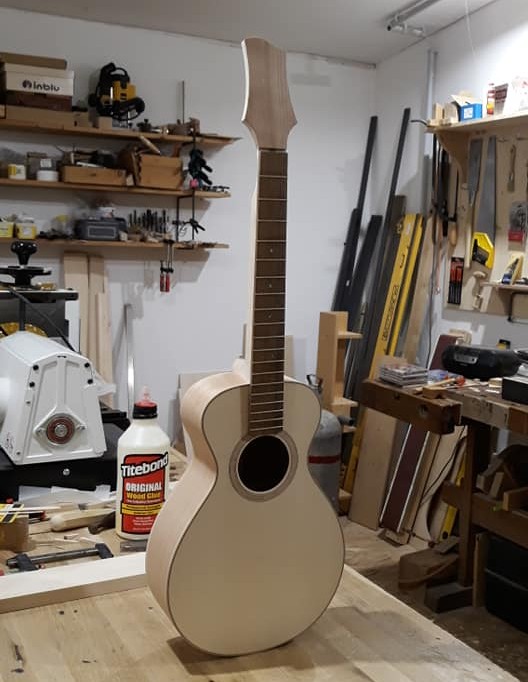
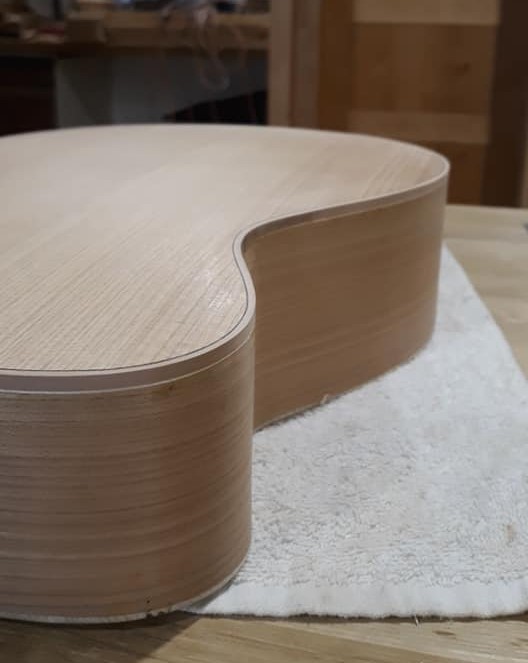
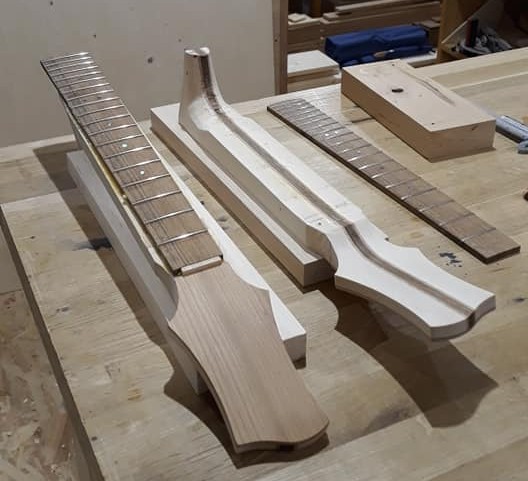
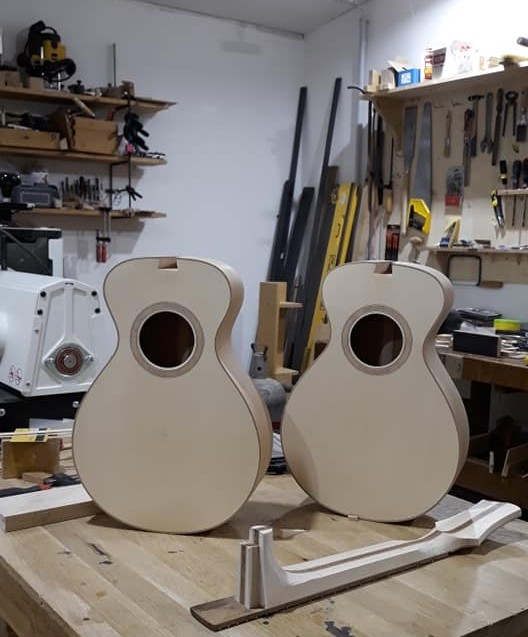
If you are looking for a baritone ukulele and are willing to spend a little more on a custom-built instrument, you may just have found it. But as you read above, Levente is also willing to build ukuleles in other sizes. And how does it sound? That matters too . Well, it sounds enormous! I played it for a little while: