The baritone ukulele II.
I warmly recommend the first postabout the baritone ukulele. If you have not read it, it may be worth starting there. Now I will continue the thoughts begun in that post, share a few more details about this wonderful instrument, and I have also made a ten-minute video.
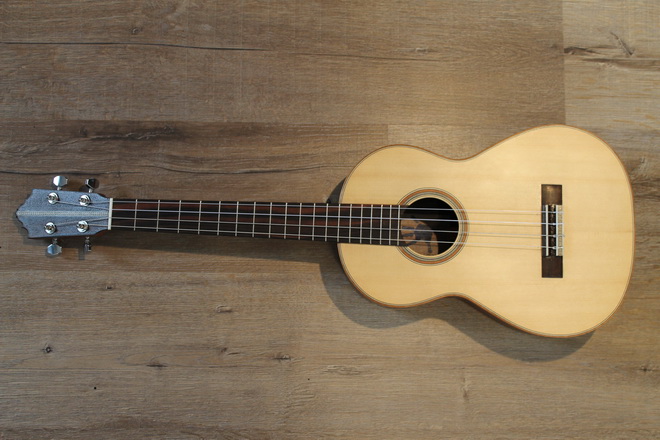
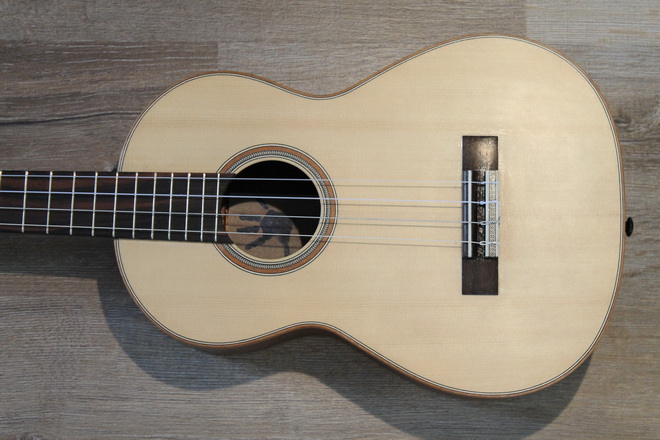
The instrument's specifications (it was built using the traditional Spanish, classical-guitar method):
top: spruce
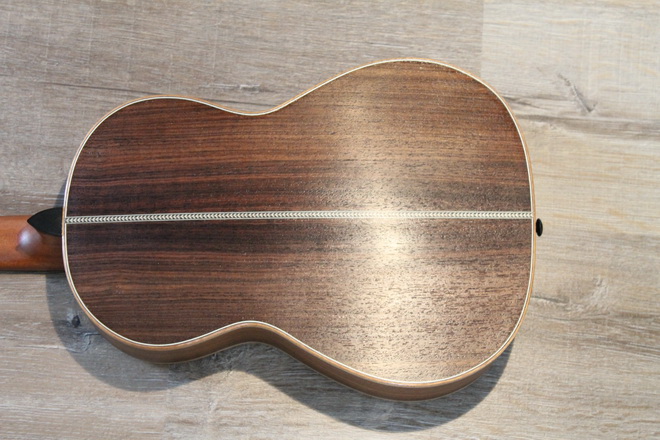
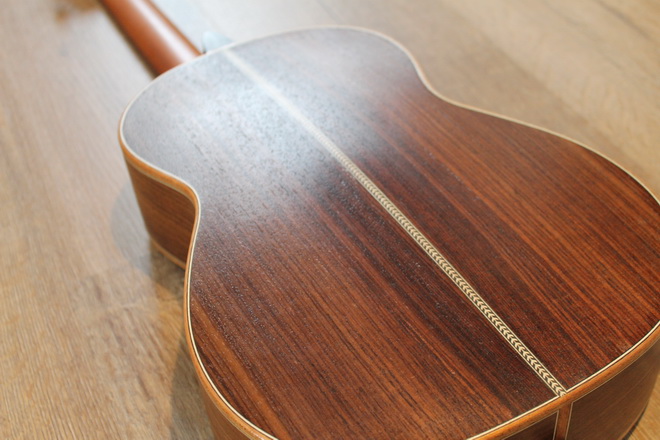
back and sides: rosewood
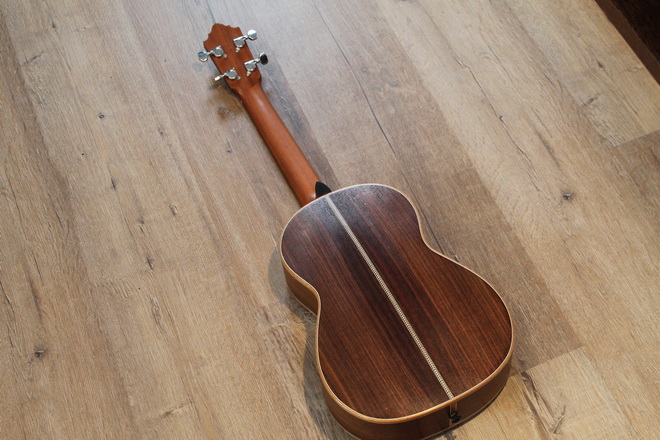
neck: mahogany
fingerboard: ebony
headstock veneer: ziricote, maple
bridge: rosewood
binding: kaya mahogany
scale length: 513 mm
frets: 19
finish: nitrocellulose lacquer
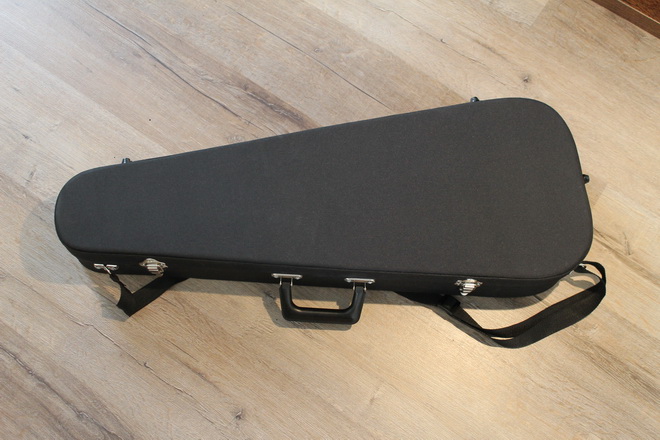
This professional case is the ukulele's home. It is a hard case, a seriously sturdy piece of equipment. It certainly will not become famous for being lightweight, but that does not matter as long as it protects its resident.
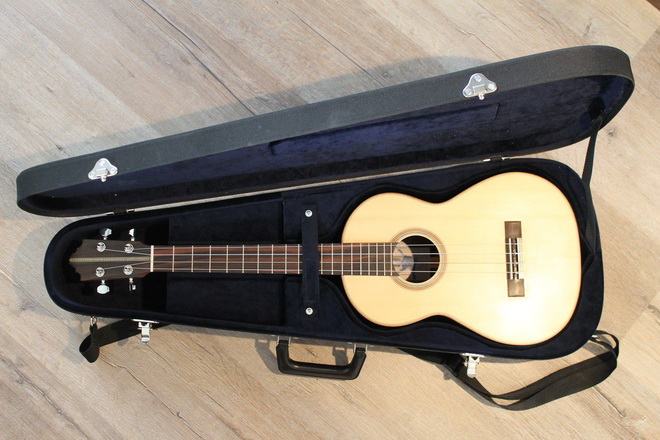
The inside is beautifully lined in blue velvet. It fits snugly not only around the edges; when the lid is closed, its inner lining also rests neatly against the neck and strings.
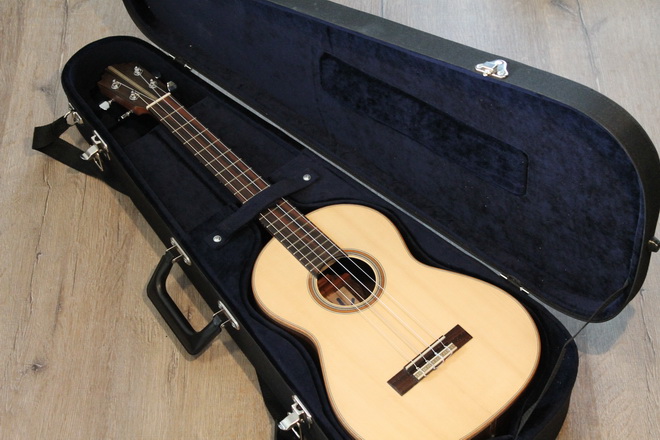
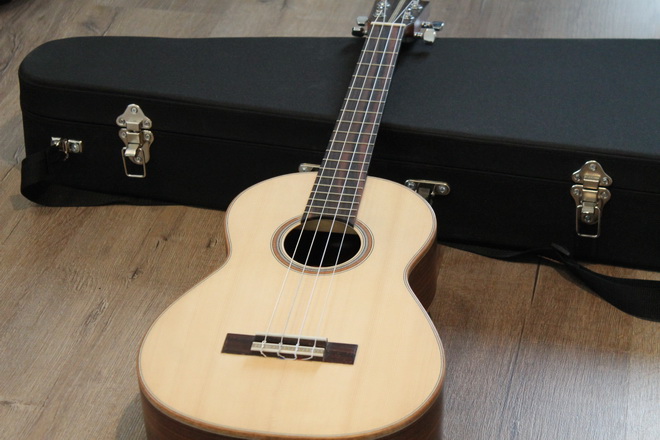
I have done neater stringing jobs in the past, but never mind – the sound is what matters . Up close you can really appreciate the astonishingly careful workmanship, the beautifully finished edges and all the tiny details.
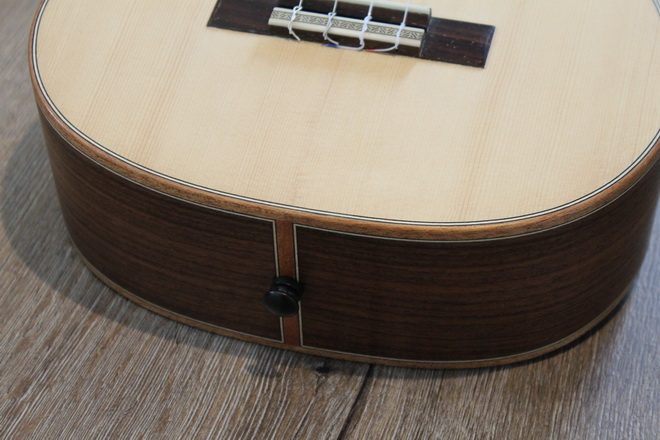
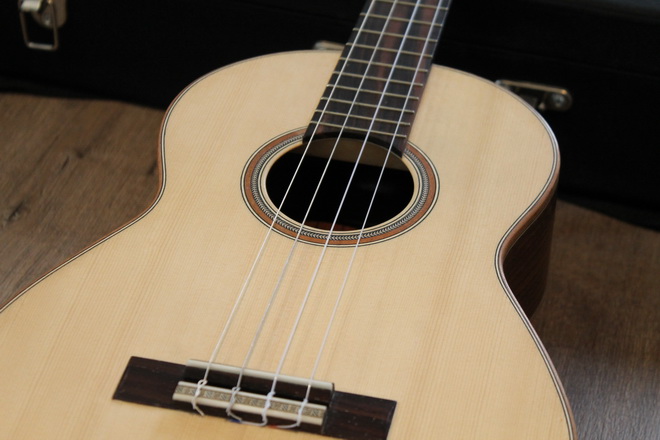
This photo shows the very sweet surprise with which my family made the birthday present even more personal. A slightly reduced print of my little daughter's palm has been inlaid into the back, so whenever I look through the sound hole I can see the tiny hand of the youngest Padawan .
And the back is simply gorgeous. Even now – although I have had this ukulele for several months – I sometimes spend minutes just looking at the grain. It is so distinctive, so flawless and impossible to tire of; the surface is smooth, and both its sheen and its feel are silky.
Finally, here is a longer test video: