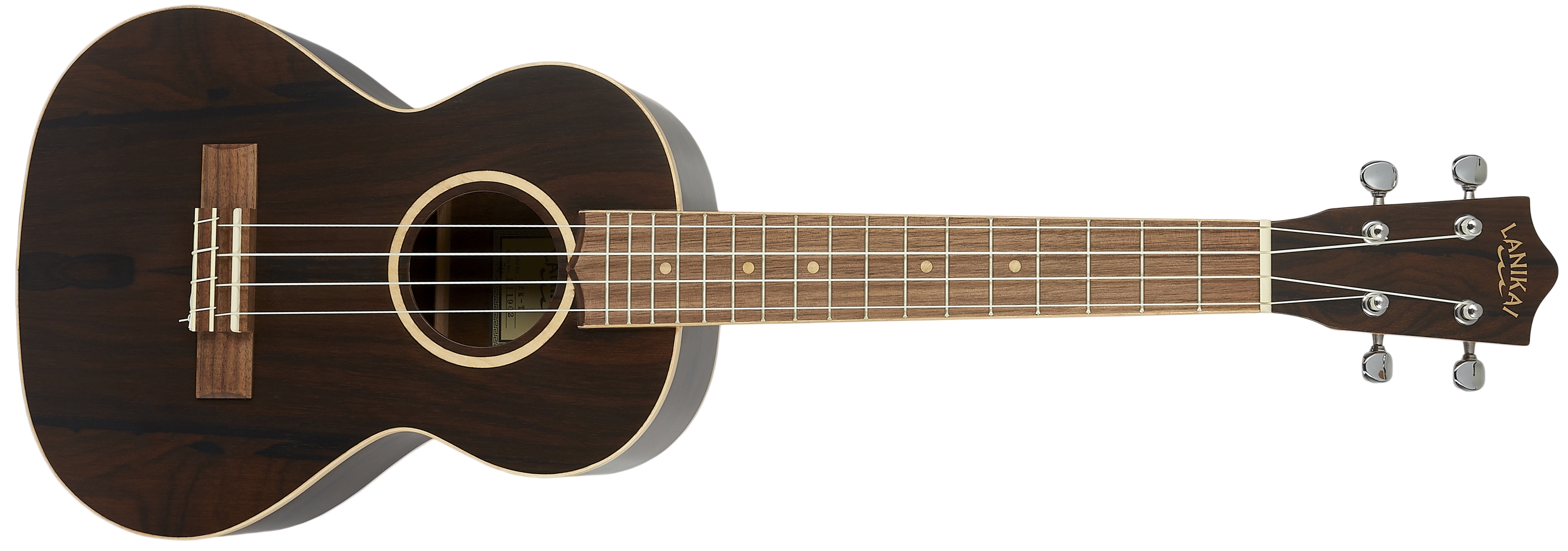
The baritone ukulele I.
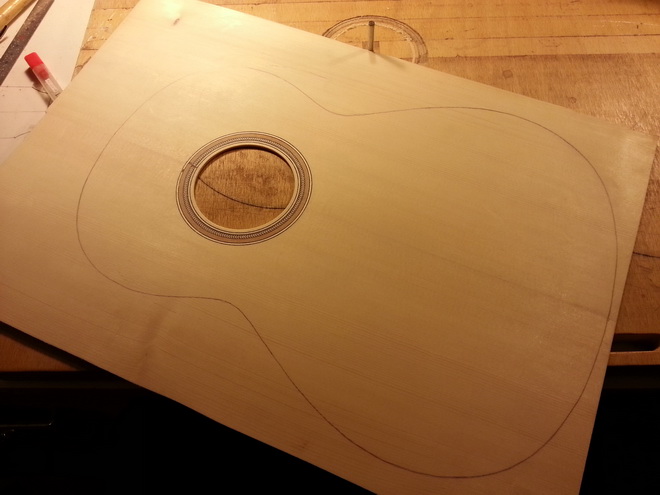
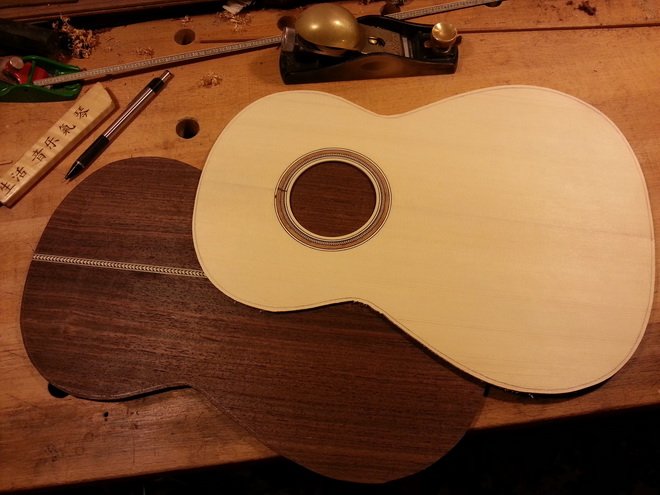
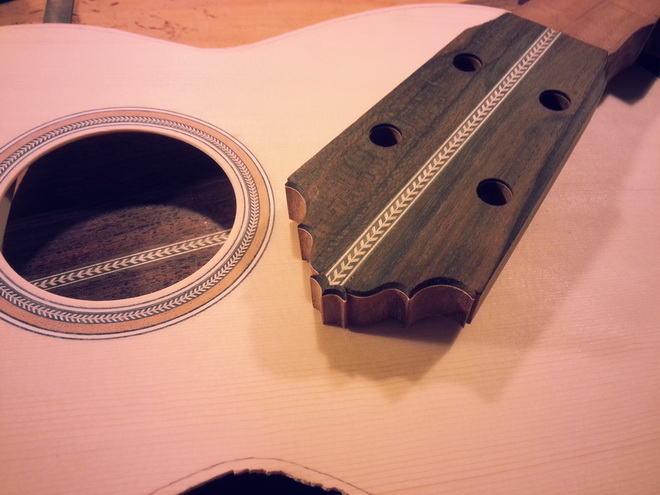
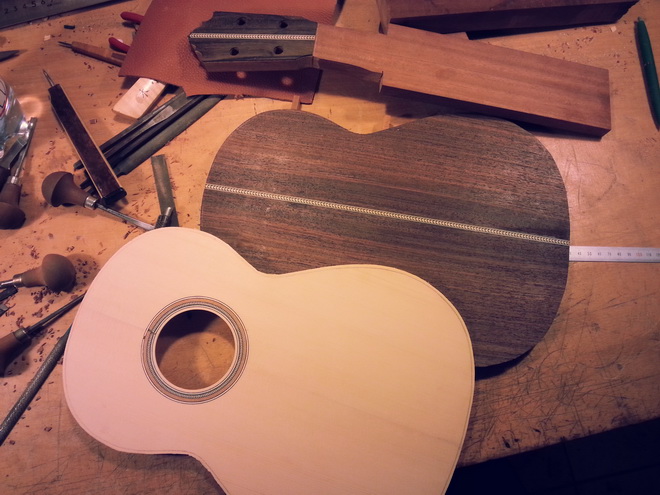
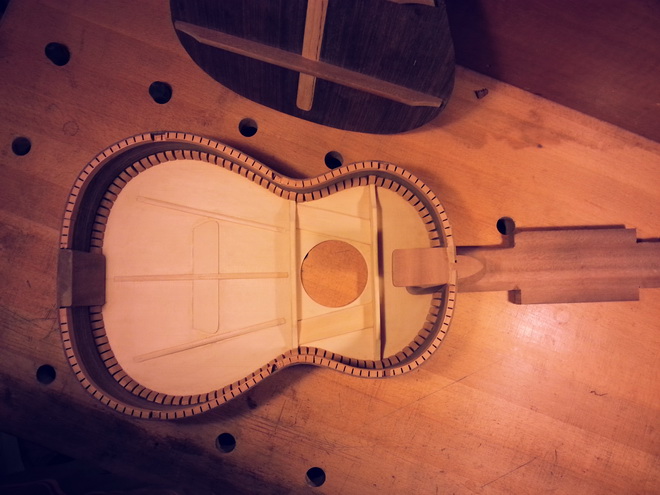
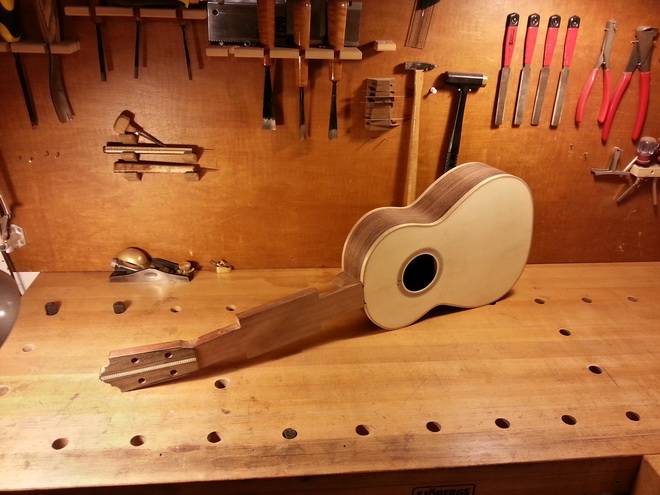
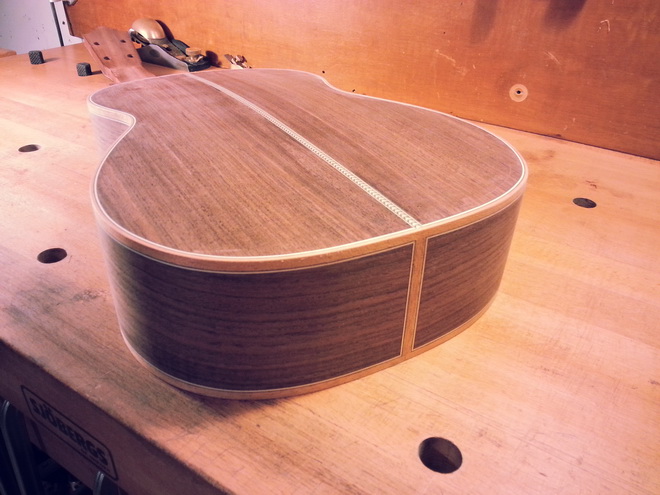
The baritone ukulele has probably been the most neglected ukulele category on the blog so far. I can finally fill that gap because I recently had yet another birthday (I stopped counting some time ago), when my family surprised me with a wonderful, custom-made ukulele. A baritone, no less. I had tried a baritone before, but it was of fairly poor quality, so I never even wrote a post about it. This new instrument, however, is fantastic. I think it is the finest-quality ukulele I have ever held in my hands. All the photos in this post were taken while my baritone ukulele was being built. Thank you to my family for plotting behind my back for months (hehe), and thank you as well to the maker of the instrument, Gábor Horváth, for this truly refined and beautiful instrument!
The baritone ukulele is the real bridge between the ukulele and the guitar. It is the largest ukulele size, and its tuning is essentially the same as a guitar's. I say essentially because the four highest strings correspond exactly to the guitar's four highest strings. A guitar, of course, also has two additional lower strings. So we can say that a baritone ukulele differs from a guitar in two respects: it has a smaller body, and it lacks the guitar's two lowest strings.
Naturally, how you tune a baritone ukulele depends on personal preference and the strings you use, but if we follow the standard tuning (as I do), its strings from low to high are DGBE. Many ukulele players start worrying as soon as they see this, because our eyes, ears and brains have been trained for GCEA. What on earth are we supposed to do with this tuning? There is no reason to panic. The chord shapes we have already learned – in other words, the way we position our hands and fingers when fretting a chord – work perfectly well on a baritone ukulele too, but... now comes a tiny bit of maths and music theory. In absolute terms, the intervals between the GCEA strings are exactly the same as those between DGBE: G-C is a perfect fourth, C-E a major third and E-A a perfect fourth. D-G is likewise a perfect fourth, G-B is also a major third, and B-E is another perfect fourth. What does this mean in practice? Exactly what I wrote above: in DGBE tuning we still get a perfectly sensible chord if we use the familiar 0003 shape that produces C major on a GCEA ukulele. So what is the difference? Simple: what is C major (0003) in GCEA becomes G major in DGBE! From this point on, some fairly intensive mental gymnastics are required if we want to convert a song between the two tunings in real time.
There is a perfect-fourth interval between DGBE and GCEA tuning – meaning between the tuning of the baritone and the non-baritone instrument, rather than between the individual strings of either instrument. (For the moment we can ignore the high-G string; from the point of view of the music theory here, it makes no difference which octave that G happens to be in.) Move up a perfect fourth or down a perfect fifth and you arrive at the same note. The recipe is therefore as follows: if I know that I need to play C major on the baritone ukulele, I find the note a perfect fourth above C, which is F. I then use the familiar F-major shape (2010) on the baritone, and it produces the sound of C major. Interesting, isn't it? So once again: on a baritone I fret C major the same way as I would fret F major on a non-baritone ukulele: 2010. And once again, as I wrote above, the chord shapes we have already learned work on a baritone too – they simply produce a different chord! Another example: if the next chord in the song is G major, on the baritone we find the note a perfect fourth above G, which is C. So if we fret 0003 on a baritone, we hear G major!!!
Before anyone gets frightened: in practice you do not actually have to know all the theory behind this. The more you play a baritone, the more accustomed you become to this automatic shift, and eventually you will be able to convert chords back and forth almost mechanically. The theory becomes very useful, however, when you run into a less common chord, because then you can react immediately and, after a few seconds of thought, put your fingers on the correct frets. Another possible solution is simply to memorise the chord pairs: C corresponds to G on the baritone, D to A, E to B, F to C, G to D, A to E, and B to F# (with the same principle applied to altered notes, sharps and flats). It makes no difference whether the chord is major, minor, diminished or augmented; the root note is what matters.
That, then, is the recipe when we want to transfer something from GCEA tuning to DGBE tuning. But there is another possibility, although this one also affects the singer and any other instruments if we are playing with other people. A song can simply be played on the baritone with the same chord shapes we would use on a GCEA ukulele. In other words, if C major comes next, we do not make the conversion described above and do not play the baritone's 2010 C-major shape; instead, we fret the familiar 0001 shape on the baritone. The obvious difference is that on a DGBE-tuned ukulele the song will simply sound lower. The singer and the other instruments need to adjust accordingly. Sometimes that may make the vocal range too low for the singer, but if the singer had the opposite problem on a GCEA ukulele – having to sing too high – they may be delighted, because the same chord shapes on the baritone will place the song lower. (You can read more about transposing in this post !)
Perhaps the most interesting situation is when two musicians play together, one on a baritone and the other, for example, on a concert-size ukulele. Because the tunings differ, their hand positions will be completely different even though the same chord is sounding.
Returning to my wonderful baritone: because of the two metal-wound strings and the larger body, its sound is much closer to that of a guitar. If a listener did not know what I was playing, they could quite reasonably mistake it for a guitar.
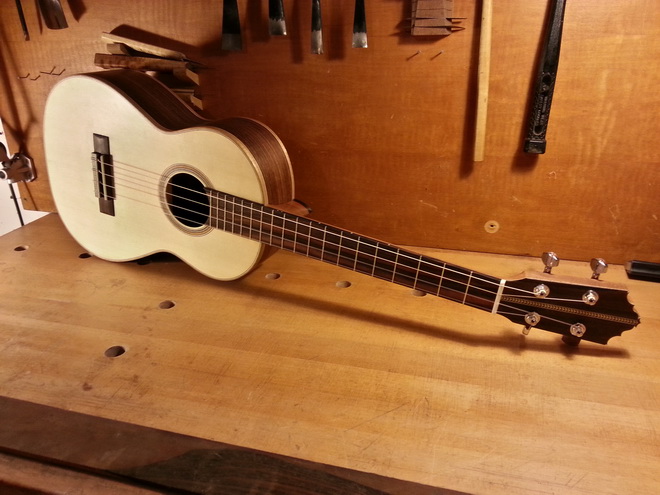
In another post I would like to continue introducing the baritone ukulele and comparing it with its smaller relatives (hopefully with a video, although at the moment there is a technical obstacle to making videos. So if anyone has a camera that records excellent pictures and even better sound – perhaps with a separate microphone – and has no idea what to do with it, feel free to think of me ).