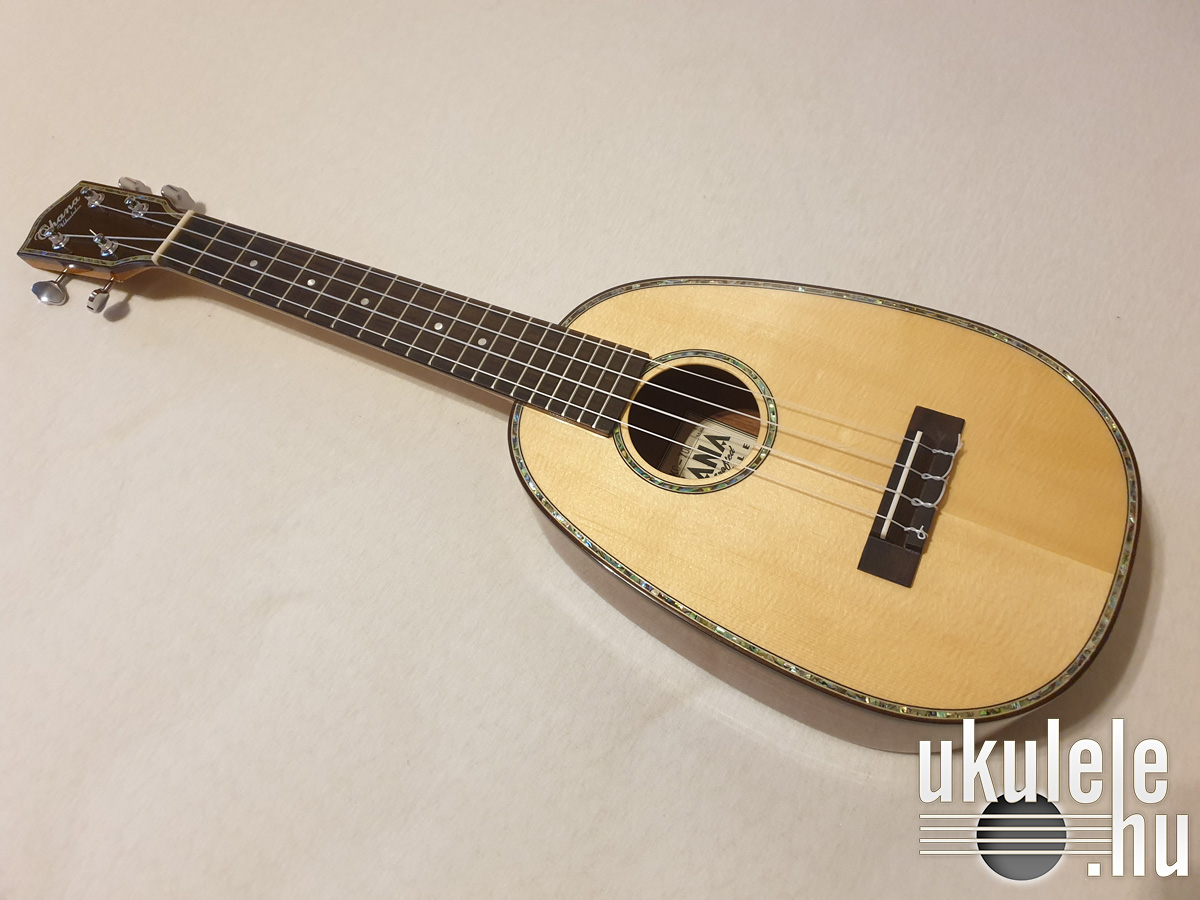
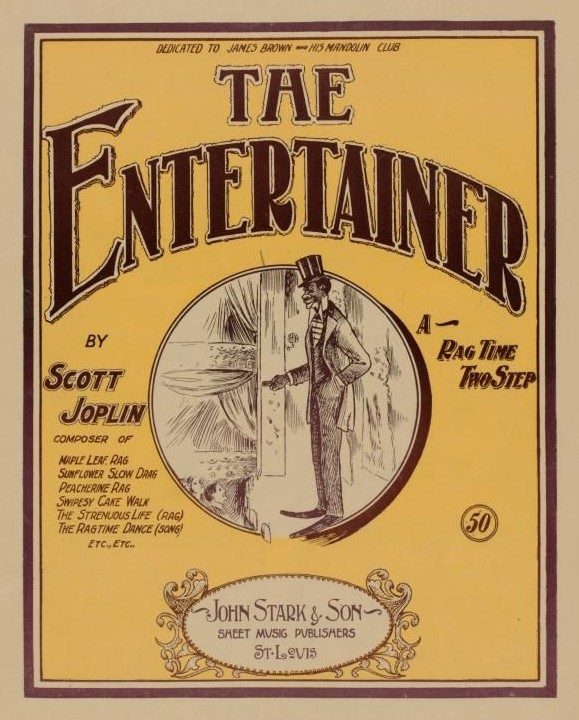
Scott Joplin — The Entertainer
This year I have had less time for song-learning posts, but I am trying to make up for that now. In fact, I have made one of the most serious and longest videos in the history of the Hungaria Ukulele Blog, based on a ukulele arrangement of the piano piece in the title. If the title does not immediately tell you which wonderfully atmospheric — and, without exaggeration, brilliant — piece this is, a piece that has been arranged in countless different ways, have a listen. I am sure you will recognize it:
This piece will be 120 years old in 2022, and like many other Joplin rags, The Entertainer has lost none of its freshness, wit or magical chord changes.
I decided to dream big and ask myself: what would this sound like on the ukulele? Is it even possible to arrange a piano piece like this for ukulele? Several people have already arranged it for guitar, and among those versions there are both terrible and brilliant examples. I would like to show you my favorite from the latter category. The guitar naturally has the advantage that its lower notes allow the accompaniment to be built much more fully. It is true that, for understandable reasons of playability, most guitarists transpose the piece from its original C major into E major. Update: Péter Légrády sent me an excellent observation, for which I thank him and which I would like to share with you: "In the video below we hear a further development of Chet Atkins's dropped-D arrangement. In Hungary, most guitarists perform the piece in C major because that is how it appeared years ago in Zeneműkiadó's Musica per Chitarra sheet-music series, in Ferenc Fodor's excellent arrangement. This may also be of interest to guitalele owners."
Back to the ukulele arrangement, then. I had one advantage: I had already been playing this piece on piano for nearly thirty years, so literally every note was in my ear. I did not need to look at the score or listen to the piece because I knew it perfectly from memory. The task was therefore to take the notes sounding in my head and transfer them onto the ukulele strings. Before I began, I deliberately avoided looking at existing ukulele versions on YouTube. First, doing so would have taken away the joy of discovery and experimentation; second, those versions would almost certainly have influenced me. Only now, while writing these lines, have I taken a look at YouTube, and I found several arrangements. In the spirit of fair play, I admit that I can see and hear one or two good ideas in them, but their shortcomings are visible — and audible — as well. Unfortunately (?) I am very critical . Examples include obviously wrong chords, notes that are not present in the original score, or rhythms that are repeatedly played incorrectly. But what can be especially frustrating about some arrangements is their incompleteness. Several versions arrange only the beginning of the rag — sections A and B — but unfortunately omit sections C and D. My own arrangement is obviously not perfect either, but I tried to make everything Joplin originally wrote for piano sound as completely as possible within the physical limitations of the ukulele.
So here is my version — in the original key, by the way. I practice it whenever I can because I really enjoy playing the piece on ukulele too, and wherever possible I continue polishing it:
If you open the video on YouTube, expand the description as well. You will find timestamps for the individual sections there, which make it easier to jump to the part you want to practice.
The structure of the piece is as follows:
1. intro
2. section A
3. section A
4. section B
5. section B
6. section A
7. section C
8. section C
9. final line of section B as a transition
10. section D
11. section D
As you can see, the piece actually consists of one small section (the intro) and four large sections. Technically, it is almost as if we were learning four different pieces and then playing them one after another with the appropriate repeats. Of course that is true only in a strictly technical sense, because musically and in terms of atmosphere the four sections belong perfectly together and form a complete whole. The important point is that once we learn the intro and the four sections, repeating them in the order shown above gives us an almost five-minute ukulele piece for our repertoire.
At first I thought I could explain how I play everything in a video of no more than 20–25 minutes. But while making it I quickly realized that it would be much longer than the previous record-holder, a 30-minute video I made about arranging songs on your own .
A huge amount of patience and perseverance is needed to work through the entire video with a ukulele in your hands, because this is a long piece and it is not necessarily for beginners. I also say in the video that beginners are welcome to try parts of it, but if it does not work yet, do not be discouraged. Learn some easier pieces and come back to this one later whenever you are ready.
So here it is: the longest ukulele tutorial video of the past ten years. I have also inserted timestamps in the description (visible when you open it on YouTube)to make navigation easier. Good luck to everyone!