Working out songs on your own
After the instrument reviews, let us move on to an interesting and exciting blog post. I was certainly excited about making it, because I had only one chance to record the video with the particular song involved. From time to time I see questions on forums and Facebook – and I receive emails asking the same thing – about how you can “work out” the chords to a song when no chord sheet can be found online. That does not happen very often, because chords for an enormous number of songs are available on the internet. But what if the chords simply are not there? Or perhaps they are available, we play them and can hear that one of them is wrong. Another possibility is that we want to train our ears and brains and deliberately avoid the easy route of downloading the chords, choosing instead to work out for ourselves which chords fit the song. How should we begin?
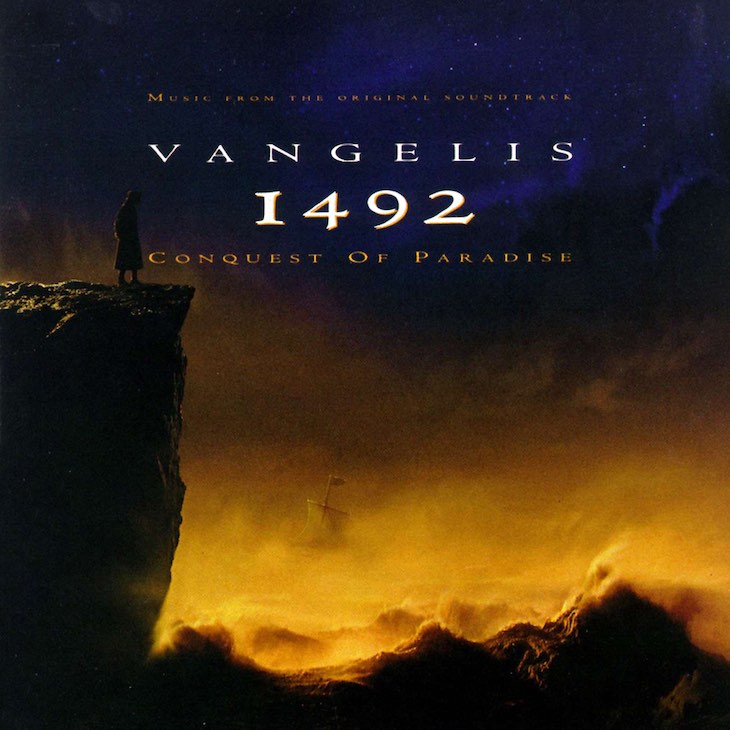
I decided to make a video in which I work out the chords to a well-known song that I had never previously played on ukulele. The lucky choice was Vangelis's Conquest of Paradise from 1492. I chose it because I think almost everyone knows it, the melody is not particularly complicated, and I assumed the chords would not be either. If you would like to refresh your memory, here is the original:
So what exactly was the task and what was I trying to achieve? I recall the melody and accompaniment, find chords on the ukulele that fit the melody, and in other words transfer the song already living in my ear onto the ukulele. I wanted to show all of this in a single uncut video – in the end there is only one cut at the beginning for technical reasons – so that you can actually see the trial and error. That is an essential part of arranging a song: we search, experiment and, with a little luck, fairly quickly reproduce on the ukulele what until then existed only in our ears. I therefore deliberately did not look up the chords before filming, and all the awkward attempts remain in the video as well. This makes it the longest video in the history of the blog so far, but I try to show a great many things and offer tips for taking a song from zero to something playable on ukulele whenever we feel like trying.
I also say this in the video, but I think it is important to write it down too: complete beginners may find this task difficult, although it is not impossible. A beginner without a background in music theory will probably have much more difficulty finding the chords and will need far more experimentation before locating both the melody and the accompaniment. I had an easier job because a certain amount of music theory, together with an enormous amount of deliberate listening over the years, means I often recognise the next harmonic turn in a song very quickly, sometimes without any experimentation at all. Even when I hear an unfamiliar song, I can identify various musical devices within it. That is good evidence that it is worth studying some music theory and learning to listen to songs in a slightly different, more conscious way. Working songs out by ear and arranging them independently is therefore an excellent and demanding challenge. If we begin recognising the musical devices I mentioned above, we are making good progress. For example: can we hear a switch between the major and minor modes of the same key? This is fairly basic for a trained ear, and in the video I refer to it loosely as “happy” and “sad” chords. Can we distinguish a major chord from a dominant seventh by ear? Do we know which harmonic functions commonly follow others – not particular chord names, but their functions? At the end of a song or a phrase, can we hear the tonic delayed by a sus4 chord containing the fourth degree of the major scale, or perhaps by movement from the IV chord? Do we recognise the endlessly reused progressions such as I-V-VIm-IV or I-VIm-IV-V – scale-degree patterns that can be moved into any key? Can we think in terms of functions and scale degrees rather than concrete keys? Do we notice how a song is structured? Once you begin going deeper into music theory, you find that if you switch on a random song you start listening completely differently, and gradually recognise more and more of these devices and harmonic turns.
It takes a great deal of patient practice to reproduce songs by ear on ukulele – or on any other instrument – and I do not want to mislead beginners: this probably will not happen from one week to the next. Nevertheless, I encourage everyone to experiment. If you have questions, write to me. You can improve month by month, although naturally the speed of improvement also depends on how much time you devote to learning.
I did not arrange the entire song. I do not deal with the major-key middle section in the video, but the same method we used to work out the beginning can be used to continue listening and searching on the instrument. So here is the video I had been planning for a long time and have finally managed to make. I hope you enjoy it. In one or two places I corrected what I was saying with on-screen captions .
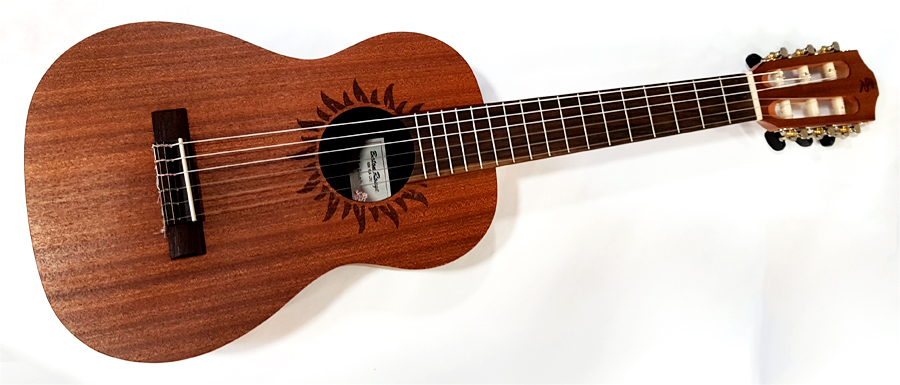
In the recording I am playing a beautiful tenor-size electro-acoustic Baton Rouge V4-TCE Sun ukulele, kindly provided by Duo Hangszerbolt. You will see a separate review video of the ukulele later.