
Koki'o transparent ukulele
I am generally wary of plastic instruments. In my mind I always imagine beautifully crafted instruments made from wood and metal, so I was curious what it would feel like to hold one of these. Thinking about it, even when visiting music shops I had never really tried plastic ukuleles before. The transparency of this one caught my attention, though. Appearance clearly matters: an instrument like this is something people buy primarily for its looks and its fun, party character, not because they are looking for the most refined material craftsmanship. With moulded plastic that kind of craftsmanship is not even the relevant question. But another perfectly reasonable question immediately arises: if an instrument is made using this technology, how accurate can it actually be?
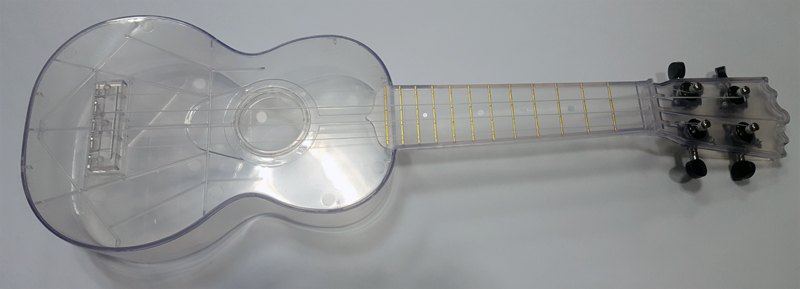
The construction of the instrument is interesting and obviously completely different from what we are used to with wooden ukuleles; I talk briefly about this in the video. I was not particularly happy with the tuning machines, although, as I mention, on a fun “party ukulele” like this you cannot really expect tenths-of-a-millimetre precision every time you turn a tuning peg. Thanks to the Aquila strings, however, after a few days the strings finally settled enough that I did not have to spend too much time tuning. Even then, as I said, the tuning machines were not always the most cooperative partners when trying to make fine adjustments.
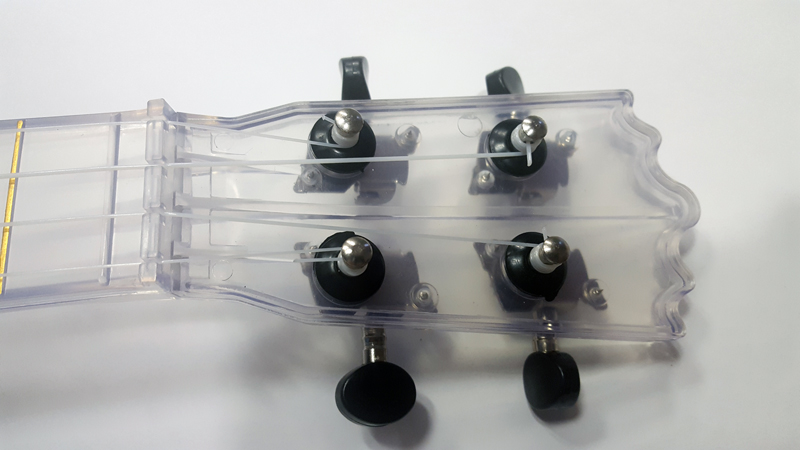
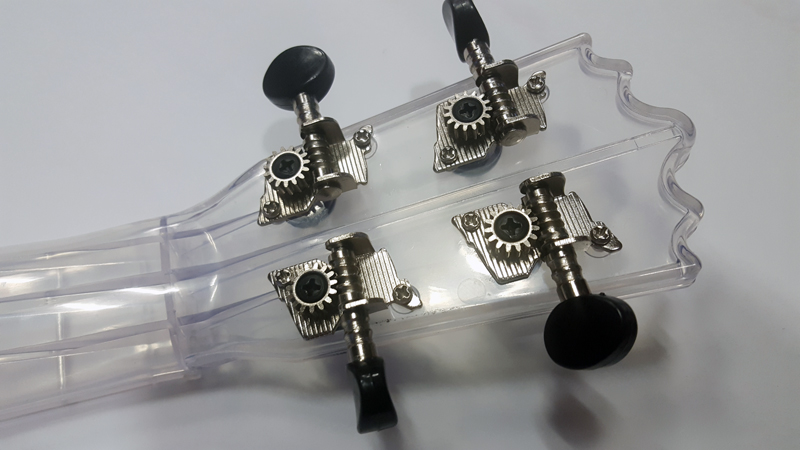
The volume of the ukulele is perfectly adequate, while the tone – at least to my ears – is completely different from that of its wooden relatives. That is hardly surprising: the plastic body produces a very different sound, and the notes do not sustain for as long either. I assume other plastic ukuleles behave similarly. An instrument like this is therefore probably best suited to strumming around a campfire – just do not get too close or it will melt – with perhaps a little simple melody playing. It should also survive a mountain hike or a paddling trip without difficulty. The only parts that need particular protection from damp and moisture are the tuning machines, because they are metal.
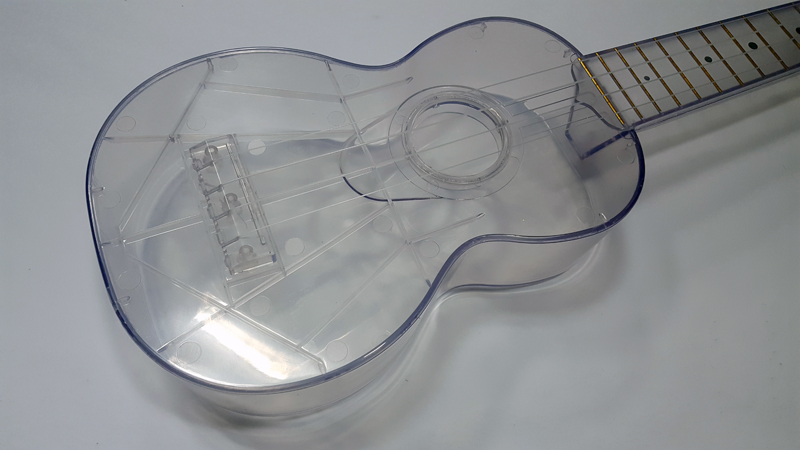
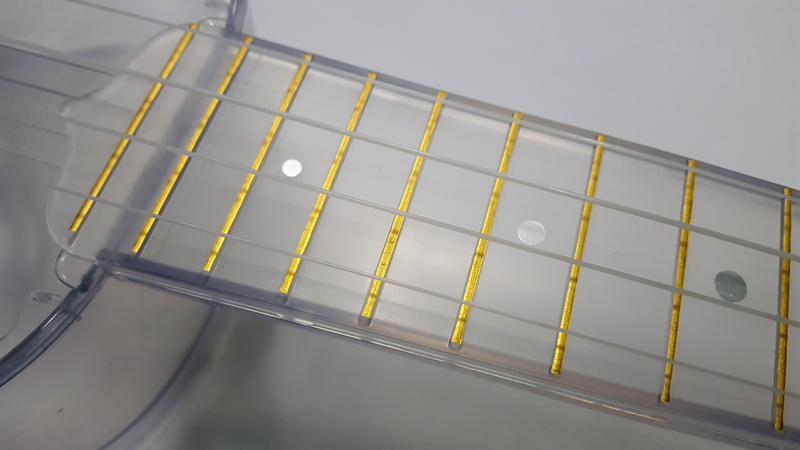
This picture shows that only the frets and the position dots on the fingerboard have been given any colour. I cannot say how quickly this colouring might wear away. (“Wear-away-ish” – there is a fine word for you.) I was not particularly satisfied with the height of the frets, however. They seem rather low and do not protrude from the fingerboard as much as the metal frets on wooden ukuleles, so fretting chords also took some getting used to. The instrument has the smallest range – in terms of neck length and number of frets – of any ukulele I have tried so far. You cannot even reach a full octave on a single string. That is another reason why I wrote above that this ukulele is better suited to a campfire or a trip than to serious melodic playing, but for those purposes you can take it along with confidence.
Let us see and hear how I got acquainted with the first plastic ukulele of my life:
This instrument is particularly good for surprising friends by suddenly producing a transparent instrument. When my acquaintances first saw it in my hands, they asked, “Is that a decoration?” Naturally I replied, “Of course not, you can actually play it!” – and there was plenty of surprise when the transparent uke genuinely made music. Its price is definitely in the affordable category, but even so I would not recommend it to complete beginners as a first ukulele. Anyone who seriously wants to start learning the ukulele should buy a wooden instrument one or two levels above this. It has much more feeling, a better sound, and is the kind of instrument worth learning on. In addition, the neck of this plastic ukulele is significantly thicker than the necks of wooden ukuleles, which may make learning chords and correct finger placement more difficult, especially for players with smaller hands.
If I had to give a final verdict, I would rather save a little more on top of the amount intended for a plastic ukulele and buy a wooden instrument instead. I would not particularly push the plastic option...