Így ukuleléztek ti
I am interrupting the usual sequence of instrument reviews and song-learning posts with a subject that may be interesting. In several earlier posts we discussed why it is worth learning to make musicand, of course,play the ukulele, and the beneficial effects of playing a musical instrument. If you have not read those, definitely catch up with them!
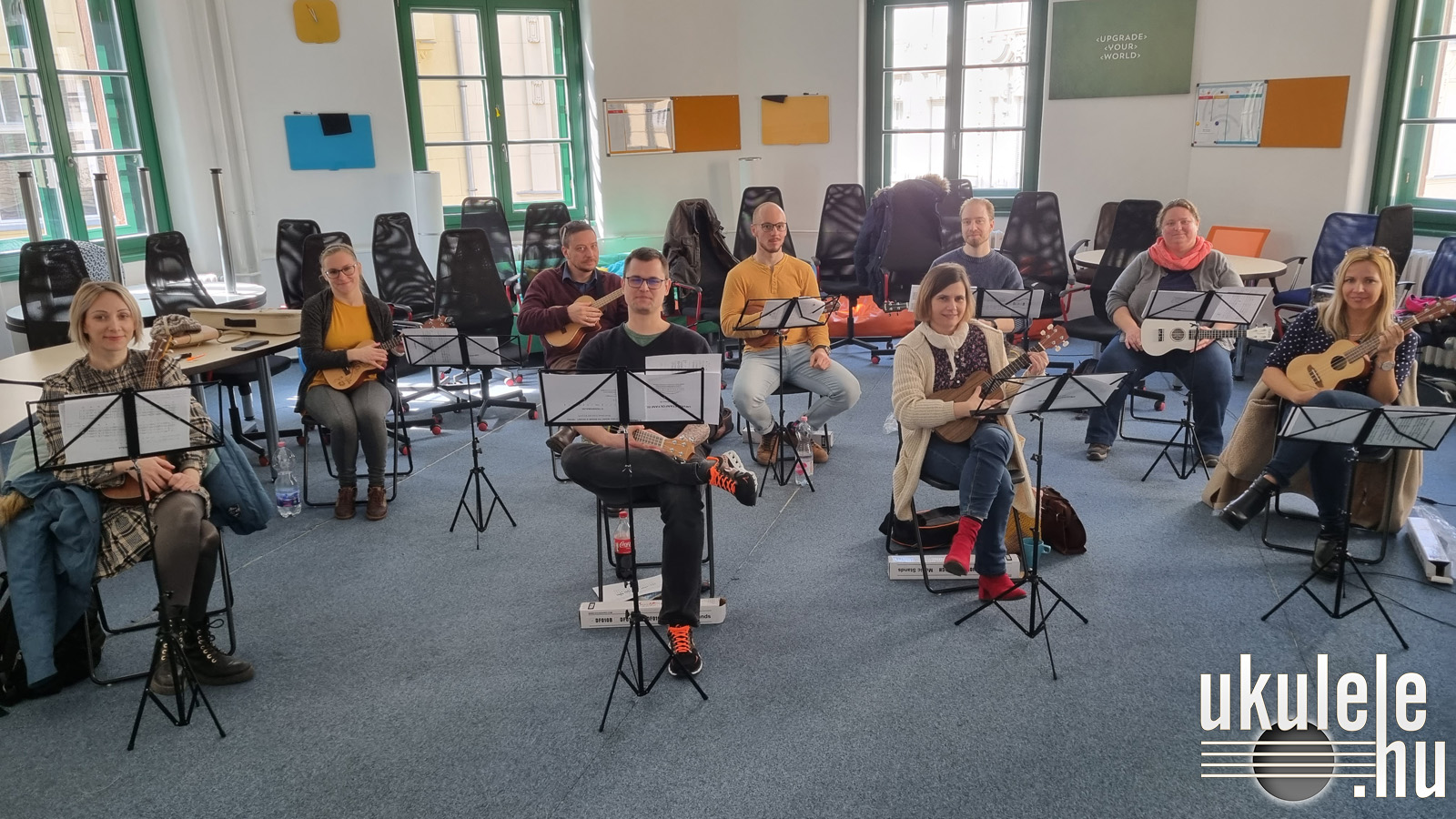
At the very beginning of my career, back in ancient times, I had the good fortune to teach in higher education – not music – and over the past few years I have also had a handful of ukulele students. The difference between the two types of teaching is fascinating, although of course obvious. Standing in front of 200 people and explaining something is very different from gathering with ten or fifteen people to explore the mysteries of instrumental playing. The more people I teach, the less individual feedback I receive during the lesson. With a large audience, a class is naturally far less interactive – what a fashionable word! – regardless of how often the lecturer says, “Please feel free to ask questions.” With a few enthusiastic students, however, we are no longer talking about a lecture but almost a session, a process of learning together. Teaching means that both pupil and teacher learn – at least that is how I have always experienced it – and teaching music opens an entirely new dimension for me when a small group sets out on that journey together...
First, a small aside before I go deeper into the subject. The Hungarian title, “Így ukuleléztek ti”, is a playful reference to Frigyes Karinthy's Így írtok ti; you will see why below – but this is not going to be a Karinthy-style piece...
I think one of the most important questions in life is how we reach another person's real personality: how we truly get to know the people around us who are, or become, important to us. That is not simple, because all of us play several roles, sometimes simultaneously, and many fascinating disciplines – most of which I unfortunately know very little about – study exactly this. Even without reading the specialist literature, however, we know how terribly difficult it is to see behind the masks. During a lifetime we become close enough to very few people to understand their personality at a fundamental level. Here I am thinking mainly of people outside the immediate family. Within a family, perhaps it is inevitable that masks sometimes fall away, although being a parent or being somebody's child is itself, to some extent, another role.
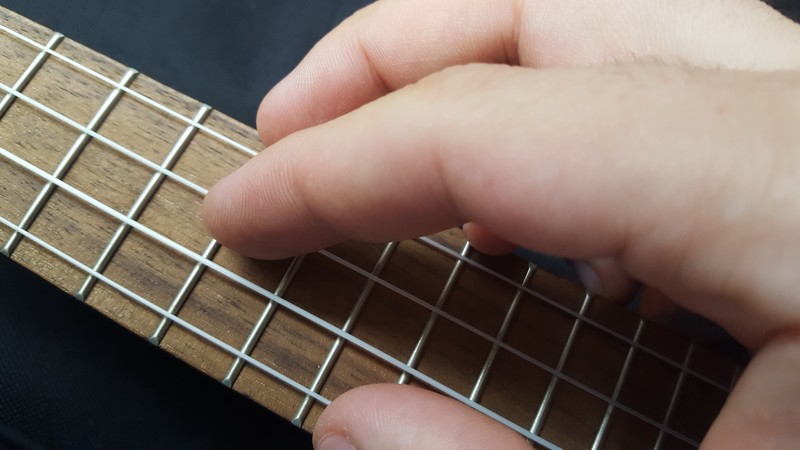
Teaching is an activity in which a teacher – at least a teacher who has an instinct for it – has to receive, understand and process feedback that comes from the student unintentionally, then respond in an appropriate way. I think I may have some sensitivity to this; at least my radar refuses to switch off whenever I teach somebody to play ukulele. And that brings us to music teaching and instrumental instruction. When someone begins learning an instrument, processes start working together in the brain – see the link above about the benefits of instrumental playing – that may never previously have operated simultaneously in quite this form. At the same time, at least from what I have observed, certain functions seem to switch off or move into power-saving mode: functions that normally run continuously in everyday life and help maintain particular traits or social behaviours. As a result, over several years of experience, there have been cases where teaching somebody ukulele convinced me that a certain characteristic I already knew in that person wasgenuine, while another characteristic turned out to be an integral part of one of their roles. In other words, they were not really – or not quite so much – like that internally; it was simply what they showed, or had to show, to the world, rather than something that genuinely belonged to theirinnerpersonality.
Teaching in itself, whatever the subject, may cause a teacher to experience something similar. But learning to play an instrument demands such a high level of concentration that the brain seems to switch off acquired, unnecessary traits while the task is under way. That is one reason I look forward excitedly to the lessons that return week after week: I know I may see something many other people do not – a part of somebody's personality that they might not reveal to everyone. In other words, I am peeking into souls. Perhaps that is not necessarily a bad thing, because the student also knows, or senses somewhere deep down, that this is happening. During practice the student knows I am watching the efforts of their fingers with hawk-like attention, but beyond the finger gymnastics I amactually seeing their attitude and many pieces of their personality that become uncovered for a few minutes. Believe me, both learning and teaching music are sources of joy, and they are far more than mechanically learning a few chords. It is shared joy: teacher and student smile at one another after a chord lands perfectly or after a successful performance together; they read one another's thoughts, and one another's hands. But learning music – like all learning – also involves struggle, not because it is bad, but because we have to travel through the unknown, and that is difficult. Once we get through it, happiness is waiting on the other side. While battling with a new chord, the student feels, “This is not quite right yet, but I have already come a long way.” They also feel that at that moment they are simply a student and nobody else: a person watching and concentrating, because the brain has capacity only for coordinating ear, eye and hand. The student smiles when all the sweaty finger exercises are rewarded by one successful bar or song. The success also belongs to the teacher because the two have travelled – and continue to travel – along a shared road. And how do they travel that road? The responsibility lies with the teacher, because the teacher is guiding a student who has exposed a part of their personality that they show to very few people. The teacher has seen it and learned it; the student cannot simply hide it again or take it back. The teacher builds part of their own personality from the student's, and through teaching music gives something back, reinforcing and rebuilding what needs to be reinforced and rebuilt. The teacher recognises their own early stumbling: “Oh, I struggled with exactly this...” and reaches under the student's arm, metaphorically speaking, to show how D major can be made easier. For a teacher it is uplifting, frightening, almost otherworldly and deeply responsible to discover the student's real personality while guiding someone who is walking through unknown territory and trusting that the direction is right. A shared journey full of difficulties and joy is an experience unlike anything else. It is extraordinary, and I thank all my past, present and future students for allowing us to travel together along these exciting musical roads and discoveries.
Although the internet is full of tutorial videos and written explanations, I understand people who want at least their first lessons from a teacher. Personal contact and live instruction have many advantages, including the uplifting and personality-building “side effects” described above. When a teacher teaches a student to make music, and when a student learns music from a teacher, both reveal and share a part of their personality. They give something to one another and take something from one another: knowledge, affection, novelty, positive energy and an inexplicable happiness, helping one another travel life's road not through a desert but through flowering meadows.
The phrase “and I'll tell you who you are” has become a cliché attached thoughtlessly to all sorts of statements. I will use it too – hopefully not thoughtlessly – because perhaps I have managed to describe briefly why I believe that you can “learn to make music, and I'll tell you who you are”.
Perhaps some readers yawned a few times while reading this post, or never reached this point because they thought I had written a huge pile of nonsense . That is fine; there can be readers like that too. In fact, many of you, dear readers, have probably sat more often on the student's side, so this has given you a small glimpse of what a teacher – or at least I – feels and thinks while teaching. Believe me, far more is happening in a lesson than simply dealing with the finger position for F major. I build something in myself from you, and I hope you build something in yourselves from me. At the end of a lesson I sometimes look puzzled when the student thanks me. “You're very welcome,” I reply – but why are they thanking me when I received so much from them? I always feel that I am the one who should be grateful, because I have seen something very few people see: you, dear student, and your personality. “Thank you too, I enjoyed it,” I add. I can see your personalities in every moment, because this is how you play the ukulele.
“It is possible to live without music. A road runs through the desert too. But we (...) want people to travel the road of life not as though crossing a desert, but through flowering meadows.”
/Zoltán Kodály/