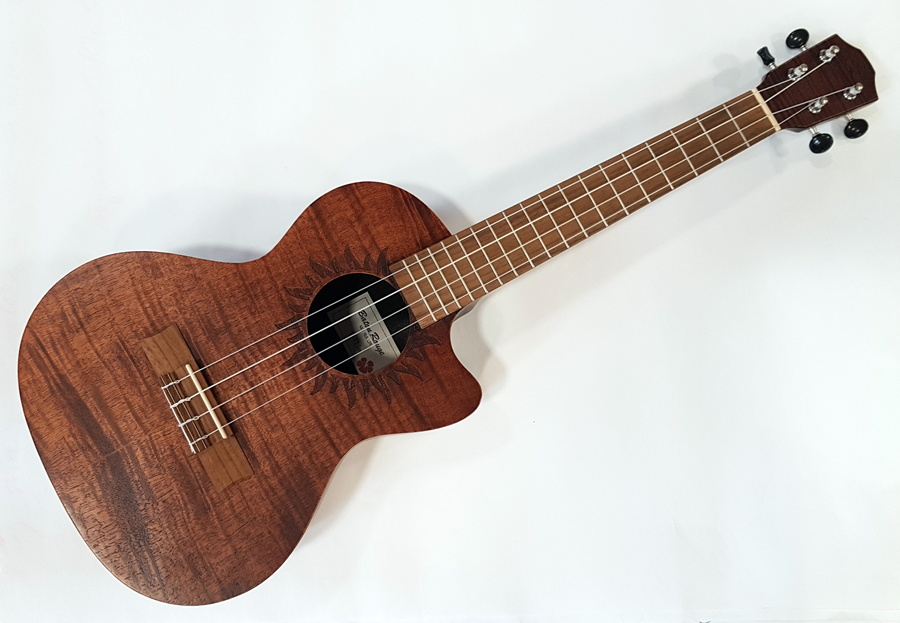
Rock your baby with a ukulele!
The choice of title is deliberate, because this blog post is connected with Ringató – with the trademark owner's permission . Parents of young children certainly know Ringató. It is probably not an exaggeration to call it one of the best-known and most popular early-childhood music and education programmes in Hungary and beyond the country's borders. If you would like to know exactly what Ringató is, where sessions are held, who leads them and generally discover the whole programme, definitely visit www.ringato.hu and feel free to explore the subject in depth.
New Ringató publications began appearing several years ago and more have followed year after year. They help parents recall the songs and nursery rhymes they hear during the sessions, supporting Ringató's most important mission: singing, saying rhymes and playing together with our small children at home. Parents who do this have already won half the battle. Musical development from early childhood is important and has numerous positive effects on a child's development without our having to “teach” the child anything or expect any performance from them. If we ourselves would like to taste music-making and learning a little more deeply, I encourage everyone to do so. As the parent of a small child, there is hardly a better skill with which we can equip ourselves, because music allows us to give our children an enormous amount. In this connection I warmly recommend the following posts:
- Why is it worth learning and making music?
- The benefits of playing a musical instrument
- Why learn to play the ukulele?
- This is how you play the ukulele– music teaching is good for more than just the student!
With children under three, musical development expects activity almost exclusively from the parent. We do not expect the child to sing or recite rhymes. If a two- or three-year-old begins joining in with a song or rhyme, naturally our parental hearts swell with pride, but the child must never be forced to do anything and we should expect nothing from our baby. Our first task is to create a loving environment in which the child can grow happily and without anxiety. When we sing or say rhymes to our baby, the message is understood: “You are what matters to me, my little one!” Meanwhile, the singing voice and the pulse of the rhyme are already working in that tiny brain. Put another way: if our small child receives day after day the little emotional parcels we send through a song or rhyme, they carefully store them and begin to build inside themselves. By holding and loving our baby and humming quietly, we continue nourishing our child through an emotional umbilical cord that may perhaps remain a connection to our greatest treasures throughout our lives.
At Ringató sessions, parents can learn how to weave that emotional umbilical cord thicker and more nourishing. The sessions also provide a short breathing space during the 24-hour service of caring for a small child, because we know that afterwards the endless feeding-sleeping-nappy-playing cycle begins again. Dear fellow parents, we all know how difficult life can be beside small children: an apparently endless, continuous service, often while physically and emotionally exhausted, trusting that the almost superhuman work we put into caring for our children will one day pay off. And it does. After three or four years there is hardly a mother who does not cry openly when her child greets her on Mother's Day, and hardly a father who is not moved by the same thing. Watching our children develop and unfold, we can say to each other: “See? It was worth it.” Of course the story does not stop there: primary school, secondary school, higher education, starting adult life – every stage brings challenges for the whole family, and parents must never forget that their efforts matter. Everyone can only hope that when the time for the final reckoning comes, we will feel the same way: that all the work and enormous energy devoted to raising our children were worth it. As time and effort recede into the past, and years or decades later we remember chasing our now-grown children around with a clean nappy in our hands, those few years may seem like a single moment. In a sense they are. Yet the foundations we lay in our children's minds and hearts during those first few years are enormously important because their entire emotional and intellectual development will later be built upon them. We can say of life itself that it lasts only a moment and will soon be gone – so come on, let us strike the strings quickly, before we reach the end and realise we forgot to play the ukulele .
So how do the ukulele, Ringató and early-childhood musical development come together? After reading the lines above, I think you already know the answer. Sing and say rhymes freely to your children, and if you can add a little strumming as well, then “mission accomplished”: you scatter tiny musical crumbs that make your child receptive to the arts while also providing emotional nourishment.
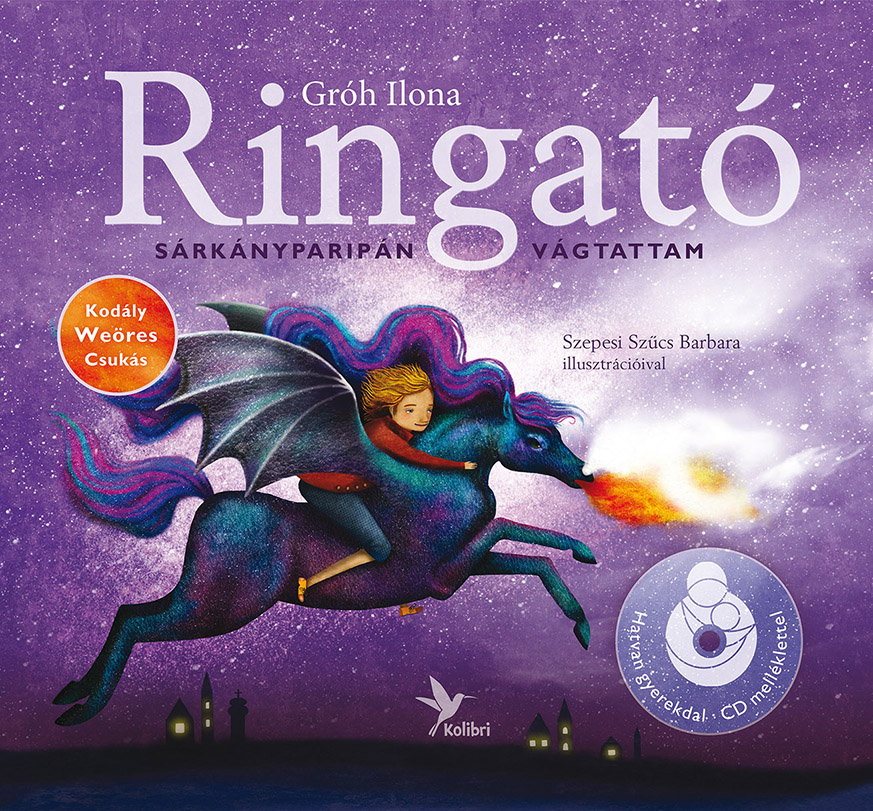
I have been planning for a long time to write about Ringató and introduce my favourite book, Sárkányparipán vágtattam. It is packed with wonderful songs and the accompanying CD simply never gets boring. The songs are performed either a cappella or with instrumental accompaniment. When instruments are present in the background, there is none of the intrusive, tasteless pop-style arranging that has unfortunately become increasingly fashionable. Instead we hear folk and classical instrumentation that fits the atmosphere of the songs beautifully and also plucks at our emotional strings. Because these are children's songs, there is no need to imagine complicated music theory or chord progressions; we are not arranging a rock ballad for ukulele. Even so, it can be said that the musical logic of these songs differs somewhat from mainstream popular music. Most can be played with two or three chords, and because many have simple melodies as well, they are excellent material for learning and practising singing while strumming. Children's songs can even make very good subjects for solo-ukulele arrangements.
Alongside the “purple book”, as many people simply call it, I warmly recommend all the other Ringató publications as well. You can see them byclicking here.
In the future I plan to learn individual songs together with you on ukulele, showing slowly and close up how I play them both in solo-ukulele style and as chord accompaniments. If you tell me which song you would like me to arrange, that will help a lot!
So here comes the “Ringató with ukulele” video. I apologise in advance because the gremlins of technology were working at full strength and the picture and sound gradually drift out of sync toward the end. The main point should still be understandable – I hope . Please enjoy: