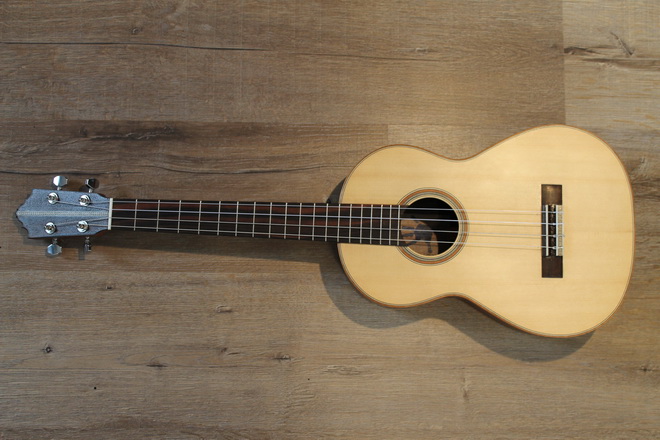
A ukulele for Christmas
For me at least, choosing gifts for the people we love is difficult. We want the present to be useful, interesting, new and genuinely pleasing to the recipient. There are probably very few gifts that satisfy every one of those requirements, so most of the time we compromise somewhere. I am sure many of you have wondered whether a ukulele can or should be given as a present, and perhaps some of you have been lucky enough to find a uke waiting under the Christmas tree. If we would like to join that latter group, we can help the family enormously by mentioning a few times that we would quite like to start playing ukulele – number of ukuleles = 0 – that our ukulele is terribly lonely – number of ukuleles = 1 – or that we would like to expand our collection – number of ukuleles > 1. Even that is not a guaranteed route to a new instrument. In the first case the response may be, “Are you sure about that?”, in the second, “Isn't one enough?”, and in the third, “Seriously, what do you need more for?” But an understanding family quietly gets the message and, with luck and perhaps our discreet assistance, chooses the newest ukulele.
The situation is different when we want to give a ukulele to somebody who does not already have one. This is a decision carrying some responsibility, because there is hardly a sadder sight than a ukulele thrown into a dusty corner or the back of a wardrobe after only one or two months, about which – or rather, about whom – everybody has forgotten. Yes, a ukulele likes attention. It needs to be played, learned and cared for, and it rewards its owner generously by creating joyful moments both for the player and for listeners. Looking at the requirements above, a ukulele certainly qualifies as useful, interesting and novel. The greatest risk is whether the new owner will actually be happy to receive it. In the absence of clues – perhaps the future recipient announces one morning before Christmas, “I want a ukulele for Christmas,” or the word ukulele and pictures of ukuleles suddenly start appearing in the family computer's search history or advertisements – giving one as a surprise is risky. The exception is when you have a Plan B: if the recipient does not appreciate your sensational gift idea, you decide to learn the ukulele yourself. Of course, two people can play the same instrument, so you can be both the giver and a self-recipient at the same time.
It is another situation again when the intended recipient already owns a ukulele. In that case our virtuoso family member probably has a clear idea of what their next ukulele should be like – in fact EVERY ukulele player, and probably every instrumentalist, has such an idea, with the possible exception of pianists . In this situation it may help to collect crumbs of information using carefully disguised questions such as, “Don't you think a concert-size ukulele made from a different wood might sound better?” If that seems unnecessarily sophisticated, “What ukulele would you like for Christmas?” works too. Do not skip this stage. If the recipient secretly dreams of a tenor ukulele but we confidently buy them a plastic soprano, certain that nothing could possibly be a better choice, we may be surprised when our gift is used more often as a garden spade than as a musical instrument.
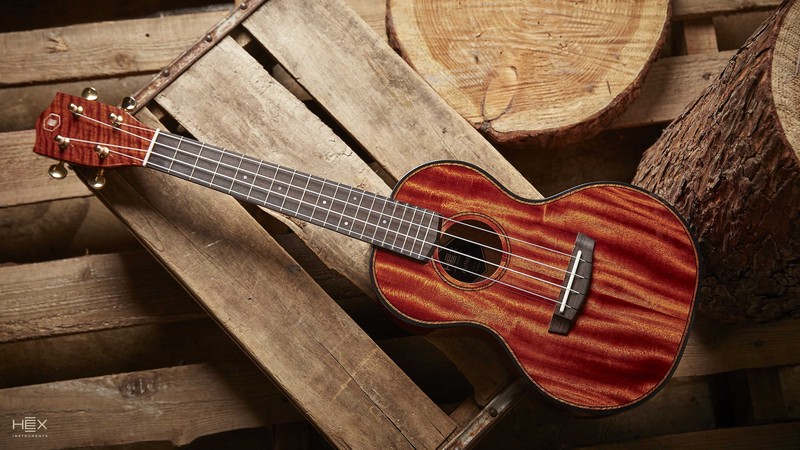
I would also like to recommend the blog posts written for people who do not yet have a ukulele. These articles discuss why learning to make music is worthwhile in the first place, why the ukulele can be a good choice, and include several tips about choosing an instrument. You can find the posts reviewing ukuleles we have tried by clicking here .
I also summarised the most important information about choosing and buying a ukulele in the webshop section, which I recommend reading.