Who Finds a Friend Finds a Treasure — Movin' Cruisin'
In the second half of the 1980s, one of my first big cinema experiences was a Bud Spencer–Terence Hill film that I watched with my parents. I remember walking down the street afterwards, bouncing around in front of them and insisting on having a fight, while they laughed and dodged my right jabs and left hooks. In any case, there was no denying it: I fell in love with the duo at first sight. My favourite films of theirs include Kincs, ami nincs, És megint dühbe jövünk and Nincs kettő négy nélkül, and I also adore Aranyeső Yuccában (although Terence was not in that one). I wore out a videotape copy of the latter, borrowed from the county library in the second half of the 1980s and watched on a borrowed video player. The love affair has lasted ever since, although I admit I could use a refresher; I can no longer quote Anulu word for word . And after watching the films so many times, their music inevitably burned itself into my ears too.
Hats off to Guido and Maurizio de Angelis. The fruit of their many, many hours spent composing was a huge number of memorable tunes, and their contribution to the atmosphere of the films is undeniable. One of my favourites is the title song Brotherly Love from És megint dühbe jövünk. The moment I hear it, I see the film's opening images again: the dogs, horses, roulette table and everything else...
The music of Kincs, ami nincs is actually an exception because it was not written by the De Angelis brothers, but by Carmelo La Bionda and Michelangelo La Bionda, who created an excellent, atmospheric song. It is impossible to imagine the sailing boat and beautiful ocean in Kincs, ami nincs without Movin' Cruisin', with its rich arrangement, congas, guitars and skilful bass accompaniment. “— Reporting, the binoculars are in the sea! — What do you mean, reporting?” If you love the Bud Spencer–Terence Hill films, join theHungarian Bud Spencer and Terence Hill Fan SocietyFacebook group, where members post lots of pictures and quotations and where film quotes sometimes turn into surprisingly long conversations . I also dedicate this post with love to that group and to the Krumplishal blog.

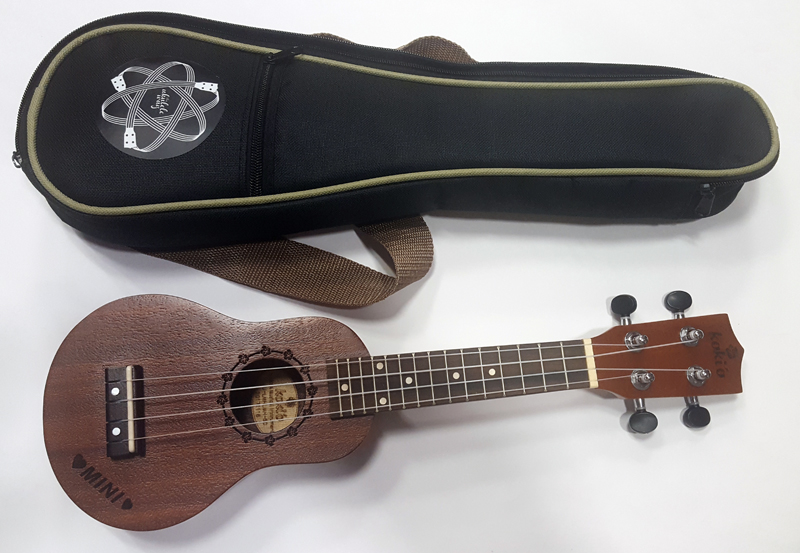
Back to the music. A few years ago I searched for the chords to Movin' Cruisin' and was slightly surprised to discover that, apart from the bridge, the song is built around only three chords. You barely notice because, as I mentioned, the arrangement is rich and both the melody and overall song structure are very well composed. It simply does not occur to you that underneath it all you are essentially hearing a C–G–F–G cycle. The melody itself is not especially complicated and, after thirty years, had had plenty of time to burn itself into my ears. So I decided to make a ukulele arrangement in which I play the melody over the chords as well:
For the recording I am wearing an És megint dühbe jövünk T-shirt. A Kincs, ami nincs T-shirt would be a treasure, but since I do not have one, it remains a treasure.
As I have written many times, the version I play is not holy scripture. It is simply one arrangement I came up with; anyone can change it and play it however they enjoy. If we pick up the ukulele and start the playback, we can easily strum the chords underneath, as you can hear and see in the first part of the video below. On its own, though, that is not quite enough: remove the backing track and our ukulele playing becomes nothing more than repeated C–G–F–G chords (although of course we can sing over them). In the second section of the video I play the chord-plus-melody arrangement, and in the third I explain what I play and how, for anyone who wants to learn my version. Complete beginners should first practise the C–G–F–G cycle and not immediately add the melody, because that may still be difficult. Players who are less new, or already consider themselves slightly more advanced, can confidently start learning the full arrangement with the melody included.
I have to be self-critical: while recording the chord-and-melody arrangement, I unfortunately failed to observe the rests properly in a few places and rushed the melody slightly — despite the fact that in the explanation I specifically emphasised the importance of keeping those rests. It is too late to complain now; this is how it turned out . The important thing is not how I play it, but that I inspire you to learn the song yourselves!