
Republic — Szállj el, kismadár
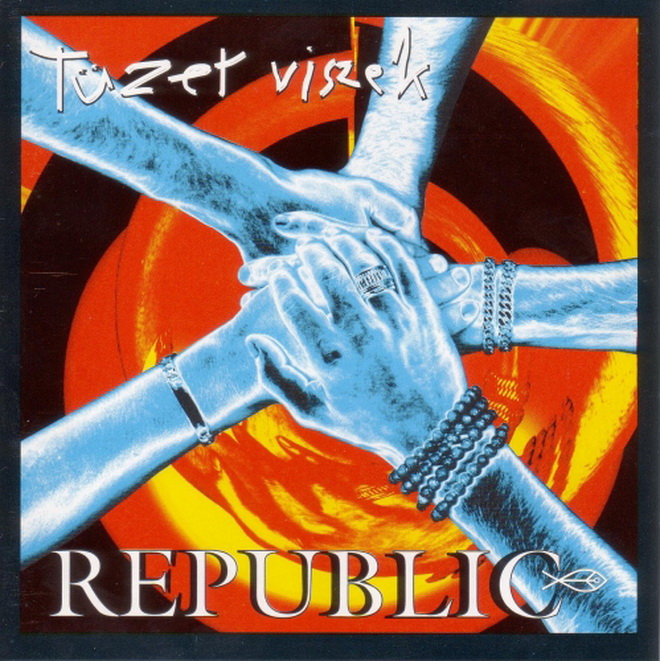
I know there is no comma in the original title, but I put one in. Sorry. It needs one. We continue the Hungarian section with a popular song by Republic which appeared on their 1995 album Tüzet viszek.
The chords in this song really are not difficult; it is built from basic shapes. If I wanted to be wicked, I could say that the songwriters left nothing to chance and built the verse on the tried-and-tested C–G–Am–F progression, which — astonishingly enough — is exactly the same as the verse progression in Let It Be. Simple as a bench vice, yet look how many hits can be made from these four chords, right? Of course a thousand other things matter too — melody, tempo, arrangement and so on — but those four chords are worth remembering because they are hammered away in millions of popular songs . One E-major chord adds a little extra colour, so we need five chords in total to make the little bird fly away. The whole thing is easy to memorise.
What will drive us mad at first, however, is the strumming . We have to tell our brain not to move the hand on ONE-two-THREE-four, but on one-TWO-three-FOUR. For that reason, an upward strum is the most practical. Everyone is guaranteed a few minutes of complete incompetence; I laughed myself silly when I first tried it, but you get used to it quickly.
So how should we strum it? I came up with an analogy that I think explains it best. Imagine that the uke's sound hole is a hot frying pan and we do not know whether it is hot enough yet, so on “one” we put our hand on it — no strum. Realising that it is already bloody hot, on “TWO” we snatch the hand upwards, brushing the strings from bottom to top with the index finger. Again: on “three” we test whether it is hot, without strumming... yep, definitely hot — on “FOUR”, up comes the hand and the index finger strums upwards. At first it will definitely be chaos; afterwards comes that ace feeling when you realise you can do this too: