Hull a Pelyhes Fehér Hó
I often say and write that a particular song is worth learning because many people know it, which makes it useful "ammunition" in company — if someone says, "Come on, play something!", you can confidently perform it. Hull a Pelyhes is like that too, although it has the disadvantage of being seasonal. That is no real problem, of course. It is still worth learning and can even serve as a warm-up before practice if you want to work through the C major–G major–F major chord cycle.
Before we turn to the arrangement, a few words about the song itself. Hull a Pelyhes Fehér Hó is a children's song that exists in many languages and in several lyrical versions. Its melody comes from a French pastoral song and first became known as a children's song with French lyrics in the 18th century. The Hungarian lyrics were written by Ernő Rossa. Mozart helped make the melody famous, and numerous classical arrangements have been written (source: Wikipedia).

I recommend this song to both beginners and more advanced players because it can be played in countless ways and sounds good in all of them. You can accompany and sing it very simply with quarter-note strums, then make the chord playing somewhat — or very — more elaborate, and eventually even play it as a solo-ukulele arrangement accompanied by triplet arpeggios. There is still almost a month until St. Nicholas Day, so there is plenty of time to practice. You need the following chords:
 |
 |
 |
First I will show you the structure of the song so you can see that it is not difficult and is easy to memorize:
Verse (2x):
[C] [C] [F] [C]
[F] [C] [G] [C]
Bridge (2x):
[C] [F] [C] [G]
Verse (1x)
And if we place those chords into the lyrics, we get the following:
[C]Hull a [C]pelyhes [F]fehér [C]hó,
[F]Jöjj el [C]kedves [G]téla[C]pó.
[C]Minden [C]gyermek [F]várva [C]vár,
[F]Vidám [C]ének [G]hangja [C]száll.
[C]Van zsá[F]kodban [C]minden [G]jó,
[C]Piros [F]alma [C]mogyo[G]ró.
[C]Jöjj el [C]hozzánk [F]várunk [C]rád,
[F]Kedves [C]öreg [G]téla[C]pó.
If you strum the chord progression above, I think everyone will hear the melody internally as well. And if you can sing while playing, try adding the melody over the chords. You can see that in a few places the chord changes occur in the middle of a word, but since both the melody and the chord progression are so familiar, I do not think that will cause much difficulty.
In the following video I show how I arranged the song for singing with chord accompaniment and also for solo ukulele, and I explain the different ways of playing it. Here is the video:
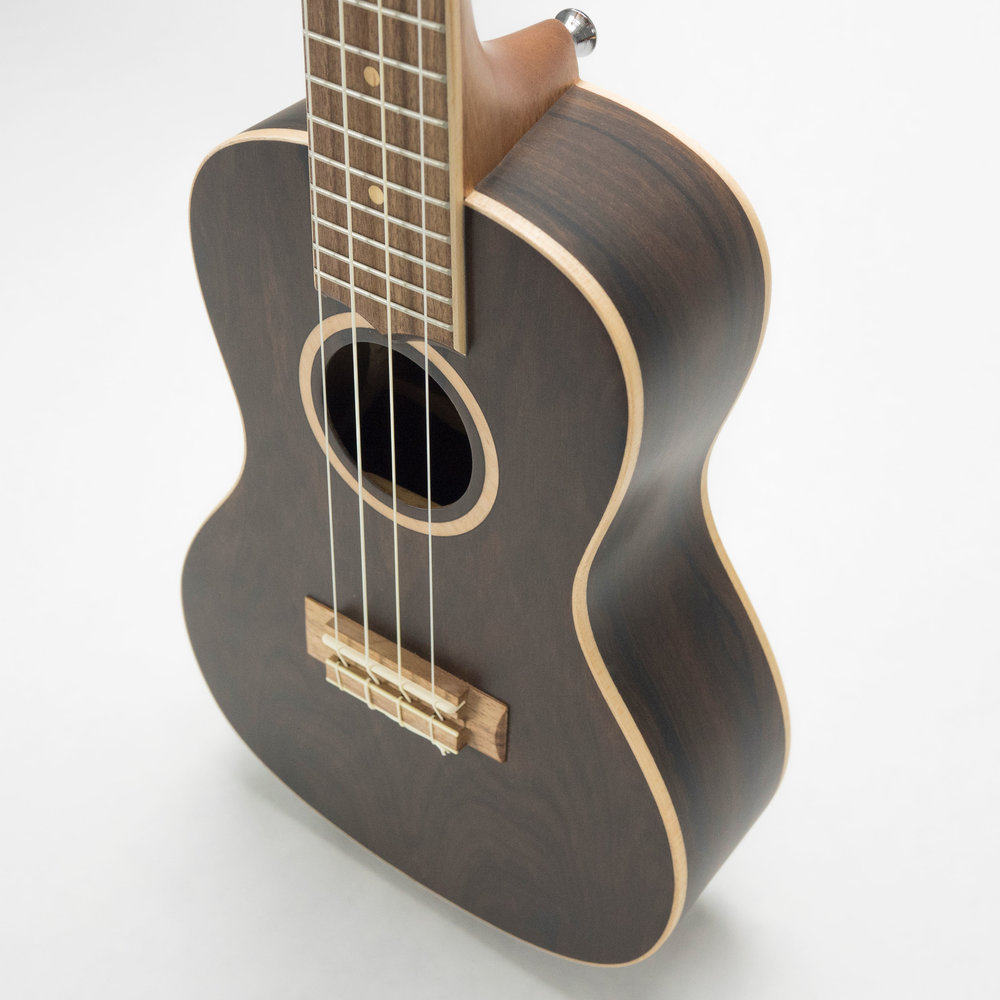
Not long after making the video above, I tried a Lanikai ukulele and happened to play this song again while testing it. So I cut the Hull a Pelyhes section out of the full instrument-review video (which you will be able to see later) and would like to show it to you as another chord-accompaniment version:
Finally, I would once again like to thank András for his help. He prepared the tablature and standard notation for the basic version of the solo-ukulele arrangement (click to enlarge):