The Beatles – Michelle
Michelle appeared on The Beatles' 1965 album Rubber Soul. I conducted a very unscientific little opinion poll among people I know and got an interesting result: relatively few recognised the song from its title. Several thought first of Pfeiffer, while others had even wilder ideas. But when I played the song to those who had not recognised the title, the response immediately became: “Ohhh, of course, this is a great song!”
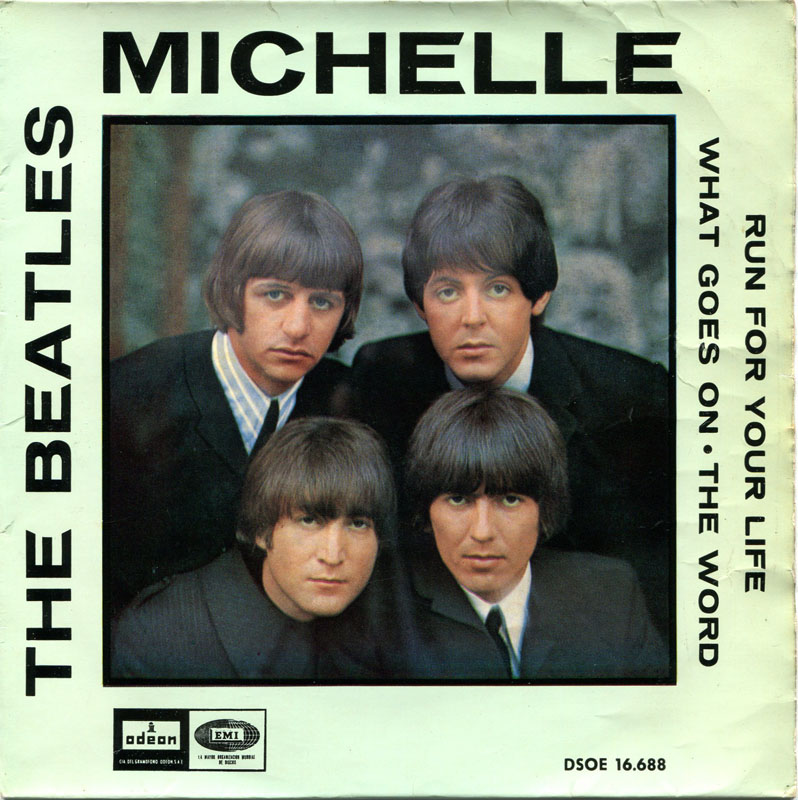
I think the song has an exceptionally distinctive atmosphere, and it is one of the relatively few Beatles compositions for which we know quite a lot about how Lennon and McCartney divided the work of writing it.
The relevant Wikipedia page contains many interesting details about the circumstances in which Michelle was written and about its partly French lyrics. If you would like to read it, click here. There are two important things the Wikipedia page does not mention, however, and I would like to share them. The first is a mishearing made possible by the half-English, half-French lyrics. The French line “Michelle, my belle, sont des mots qui vont très bien ensemble, très bien ensemble” is very easy to hear in English as “Michelle ma belle, some say monkeys play piano well, play piano well.” . The second feature Wikipedia does not discuss is the continuous alternation between minor and major chords, with diminished chords occasionally appearing as well. Wikipedia merely says that “The song was initially composed in C, but was played in F on Rubber Soul (with a capo on the fifth fret).” In other words, it was first composed in C major but recorded in F major using a capoed guitar. Yet the description does not discuss the continuous alternation between minor and major that I mentioned above – something the specialist literature that I do not happen to have beside me right now surely covers . Start the song and listen: the movement between minor and major is immediately apparent and so fundamental that the introduction begins in F minor, the verses begin in F major, and even the final syllable of the vocal falls on F major. The song then fades out while continuing to move between minor and major, with diminished chords repeatedly slipping in between. The entire song travels along this musical knife-edge, maintaining uncertainty about whether it is sad or cheerful – most of all, it is slightly bittersweet.
Because the introduction contains such a beautiful guitar line, I thought it must sound good on ukulele too. So I started working on it – more than once, actually – but only now did I finally have the patience to turn it into a solo-ukulele arrangement. And what did I discover in the process? Queen's Bohemian Rhapsody contains the same musical turn as the Michelle intro. Well, well! . I had never read this anywhere, so I count it as my own discovery, although of course somebody else may well have noticed this tiny piece of musical copy-and-paste before me.
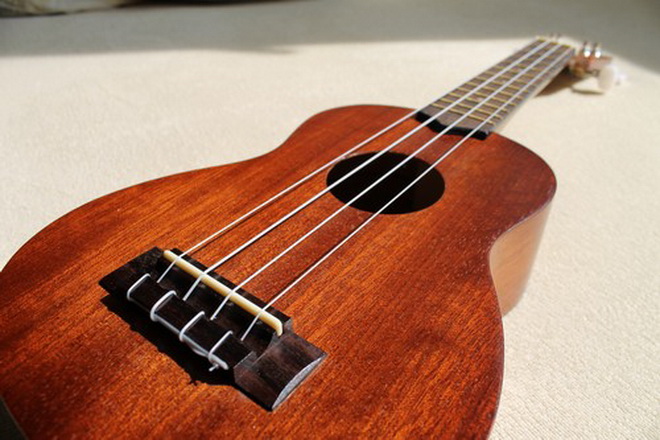
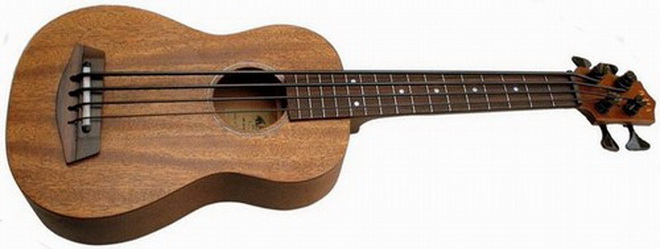
So here is Michelle on soprano ukulele. As with Let It Be, I struggled with chords played high up the neck – even more so this time. It was a horrible feeling to discover that something I had practised on tenor was barely playable for me on soprano. I thought for a long time about whether I should show the video at all because it is far from perfect. Then I decided: why not? It is an excellent example of the fact that moving between ukulele sizes is not necessarily simple with more complicated pieces, and it also demonstrates why solo-ukulele playing is generally easier on at least a concert-size instrument. I plan to make tutorial videos for both Let It Be and Michelle in the near future.