Tanglewood TWT 16 E
I had heard and seen Tanglewood ukuleles several times, but until now I had never had the opportunity to try one. Finally, an example reached me, thanks in part to the help of an enthusiastic reader, Ádám. I was particularly curious about this instrument because its body is made from koa, just like my old first ukulele. So in some sense this Tanglewood and my Lanikai are distant relatives .
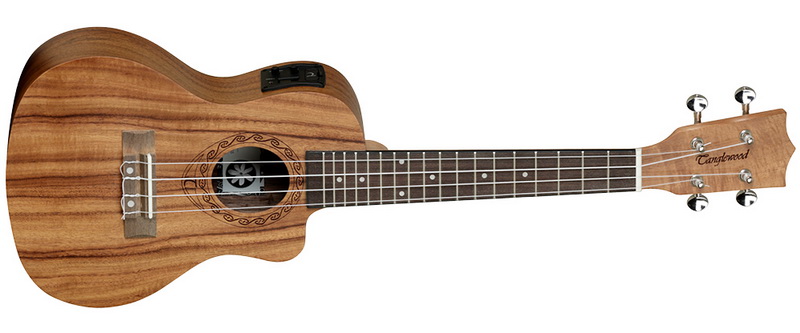
The most interesting feature of this Tanglewood ukulele for me was its size. I spent several minutes wondering whether I was holding a tenor or concert instrument. Concert ukuleles are usually smaller than this and tenors are usually larger. According to the manufacturer's website it is a concert-size instrument, but my concert-size Lanikai is smaller while all my tenor ukuleles are larger. In any case, the body shape is attractive and the koa grain is naturally beautiful, so Tanglewood has nothing to worry about on that front. There are two things, however, that cannot pass without comment, one of which Ádám had already drawn to my attention, although from a slightly different angle. He told me he had not been satisfied with the electronics because replacing the battery was impossible or nearly impossible. For that reason I did not go anywhere near the battery compartment, but naturally I switched the electronics on to use the tuner. Tuning did not go smoothly and I tried to work out why. The strings neither felt nor sounded worn out; when I turned the tuning machines slightly, they responded properly and the change in pitch was clearly audible. The built-in tuner, however, did not follow those changes reliably, so tuning took quite a while. The second issue was immediately obvious both to the eye and to the hand – or finger: the ends of the frets.
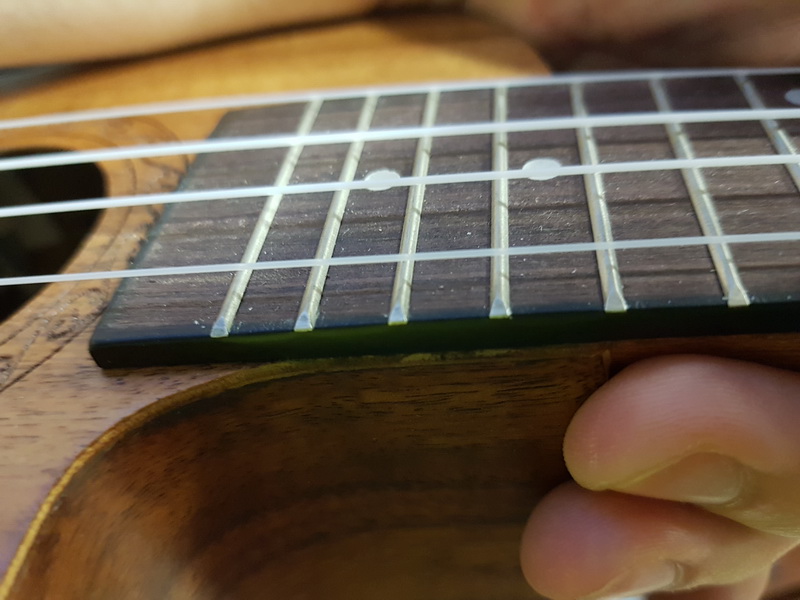
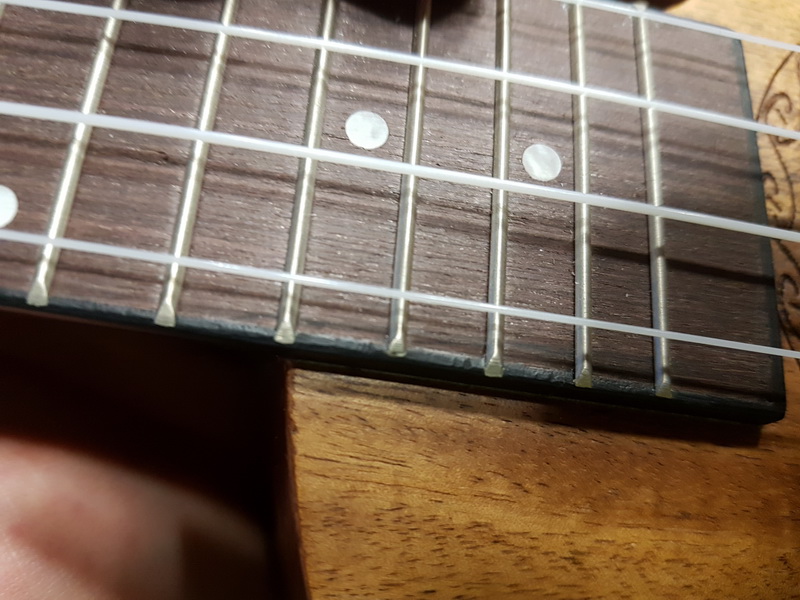
I do not know whether this one instrument simply slipped through quality control – or whether Tanglewood does not regard this as a requirement – but the fret ends had not been checked properly. Some are shorter than they should be and others project slightly beyond the edge of the fingerboard. From a distance this is not obvious, but close up it is easy to see, and while playing it is not pleasant when an unfinished fret end scratches your finger or palm. The problem is most noticeable on the frets closest to the body, so players who rarely venture that far up the neck and mainly strum basic chords may not find it particularly disturbing.
The ukulele's sound – once you finally manage to tune it – is naturally good. The koa body and Aquila Nylgut strings provide a pleasant tone. The unfinished fret issue mentioned above obviously does not make the instrument unplayable; it can still be played very well. It is simply an irritating detail that could have been eliminated by the manufacturer with a little extra attention. So let us hear how this Tanglewood ukulele sounds: