Kala U-BASS
Not long ago I published a post called "Bass! That's Heavy!" about Kala's bass ukulele. Now I have had this interesting instrument for a few days so that I could try it myself.
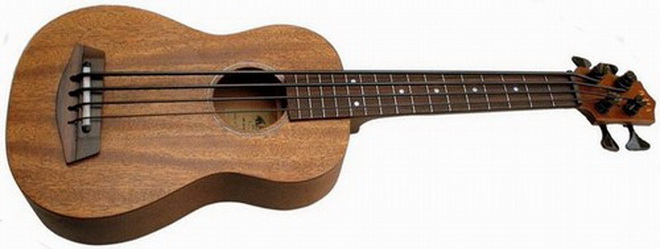
The U-BASS is essentially a bass guitar transplanted into a baritone-size ukulele body. It arrives in a very sturdy hard case, which is hardly surprising: an instrument this expensive and unusual needs protecting from dogs, cats, passers-by and subway doors alike. The enormous tuning machines barely fit inside the case - you almost need a shoehorn:
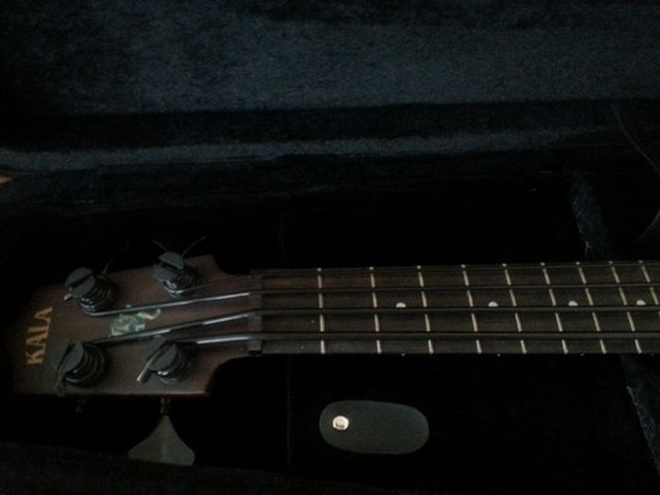
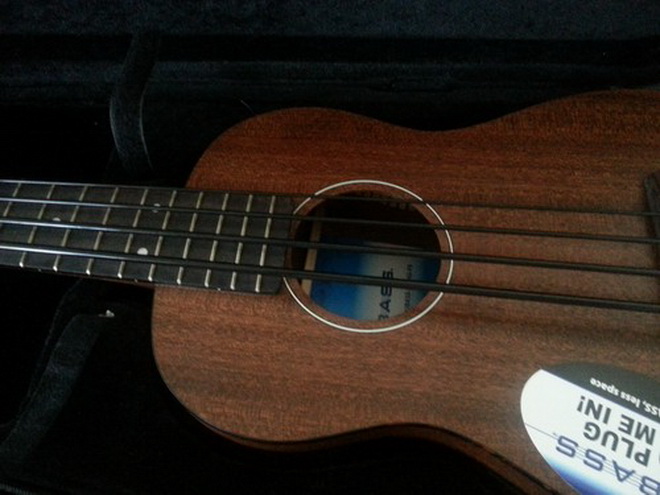
The sticker can of course be removed
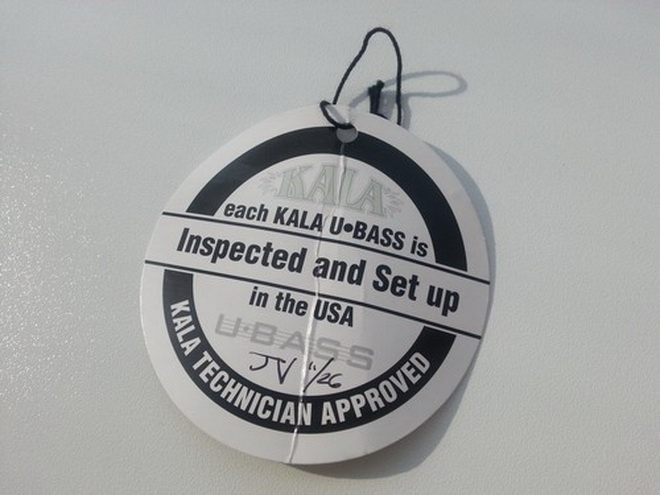
A small label reassures us that we are dealing with a quality instrument...
The moment you first pick up this ukulele, you notice the disproportionately thick strings. They practically shout, "pluck me!" They are made of polyurethane, have a very unusual smooth feel, and need to be thick so that they can produce low notes despite the relatively short scale length. The other thing that immediately catches the eye is the built-in tuner, which lets us bring the strings to the desired pitch quickly:
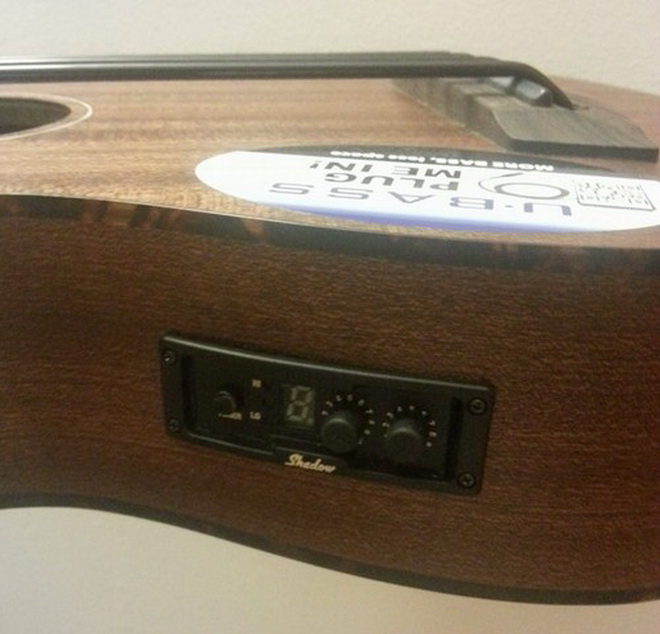
Besides tuning, this is also where we adjust volume and tone
One important point about tuning is that it is exactly the same as on a bass guitar: E-A-D-G. Given the thickness and setup of the strings, there is not much room to experiment with alternative tunings. Anyone accustomed to the ukulele's G-C-E-A tuning may therefore need quite a while to get used to these strings.
We are talking about a bass ukulele, so most of the time we are not going to hold full chords but play individual bass lines and melodies. That is extremely comfortable on this instrument because the polyurethane strings feel so good under the fingers. Fretting them is easy and genuinely "smooth" - in fact you barely need to press at all. You know when something looks so satisfyingly tactile that you just want to squeeze it? These strings are exactly like that.
If you have ever thought about playing bass guitar but found metal strings too difficult to press down, or perhaps have small hands and were discouraged from playing low notes for that reason, the bass ukulele is a cure for almost every excuse. Its friendly strings and normal-sized neck can substitute very effectively for a bass guitar, or even the role of a double bass. There are some techniques you can do on metal strings that do not really work here - slap bass, for example - but if you do not need those, this can be a perfectly suitable instrument even in a band.
Because it is an electro-acoustic instrument, we can still coax some sound out of it without connecting an amplifier. As we play, we hear a pleasant purring sound, although not at very high volume. A body this small simply cannot project deep bass notes loudly without amplification. There is a reason a double bass is such an enormous piece of furniture! Still, when we press the body against our stomach, the resonating air and ukulele body make our insides tingle as well.
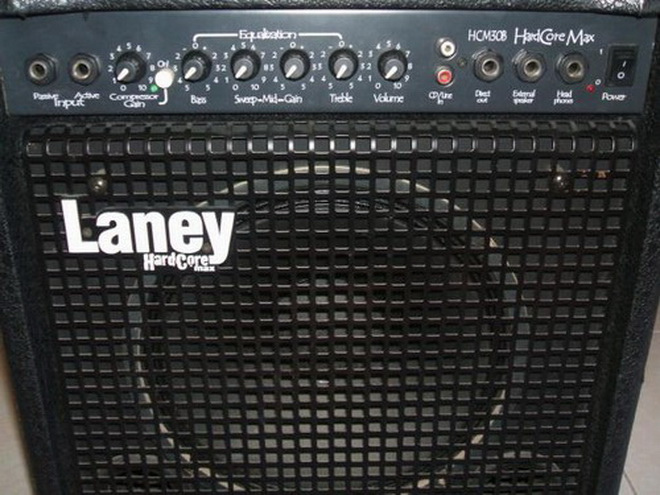
Then we grab the amplifier cable, plug it in and let it rip! And it does not disappoint. If someone heard us without seeing the instrument, they would never guess we were playing an electro-acoustic ukulele. I used this bass-guitar amplifier:
I enjoyed every note I coaxed out of the instrument. It was a very strange and enjoyable feeling to play what looked like an oversized ukulele and hear the sort of sounds I normally get from my bass guitar. Here is a little sample to whet your appetite:
I mentioned this above, but it is worth emphasizing again: there is no automatic transition from a "normal" ukulele to this bass ukulele because the tuning is completely different. I do not want to put anyone off the U-BASS - I think it is a very good and very entertaining instrument, it can hold its own perfectly well in a band, and in my opinion it is fairly easy to learn. I simply do not want anyone to pick one up after playing an ordinary ukulele and assume they will immediately know how to play it. They will not. But the same rule applies here as with most instruments: after a few weeks, and more realistically a few months, of practice you can make it sound very good. Anyone with a guitar or bass-guitar background, of course, will have no trouble charming an audience almost immediately .