Chords 20: B Major
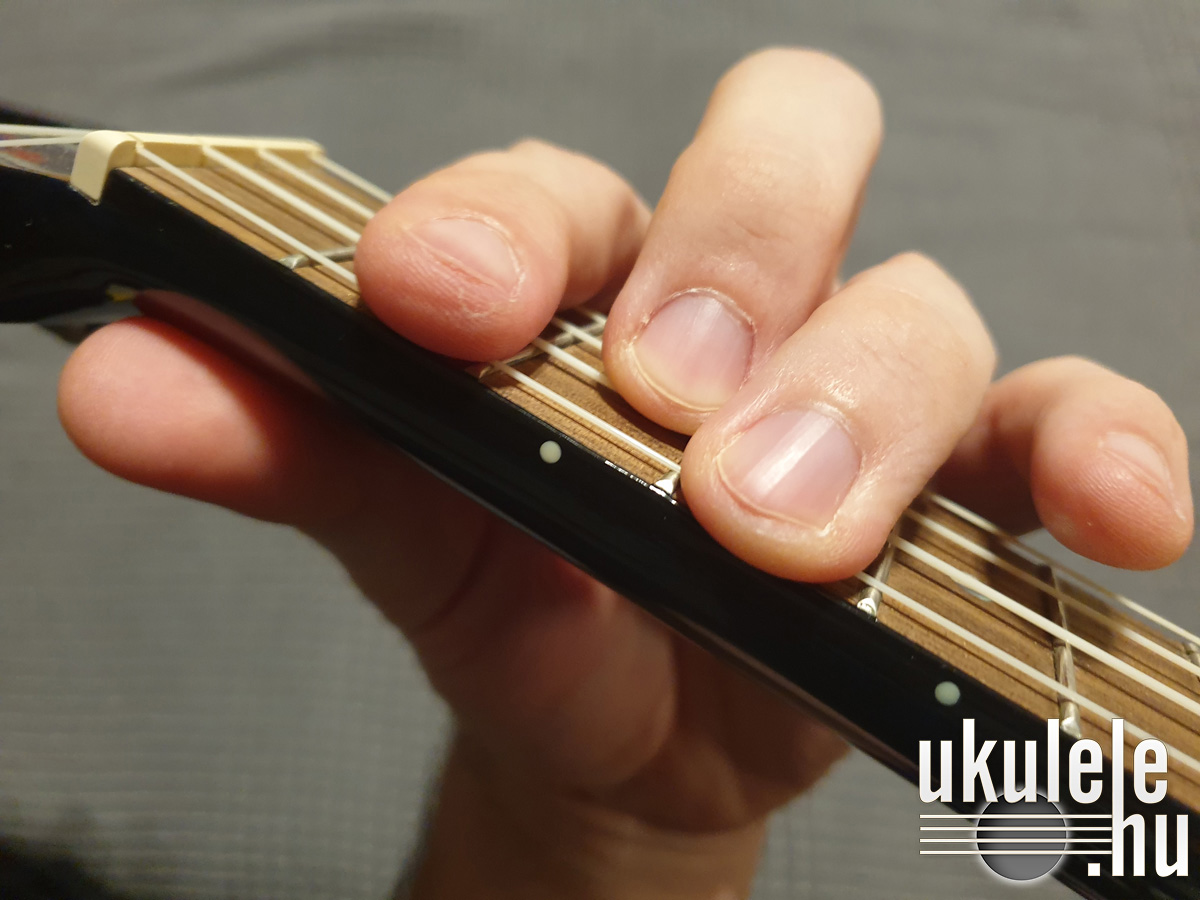
After many chord-learning videos, we have reached a real milestone: this is the first barre chord we learn. A barre chord means using one finger — usually the index finger — to fret all four strings at once (or two or three strings in the case of a partial barre), while the remaining strings are fretted with the other fingers: middle, ring and little finger. Barre chords are difficult for several reasons, and we have to deal with all of them. First, we need to press all four strings firmly enough against the fret that when we pluck them individually, none buzz or rattle.

A finger is not a perfectly straight plank: it contains bones, joints and muscle. So when we use one finger vertically across all four strings, we will notice that some areas press more firmly than others. It takes some practice to position the barre finger so that every string is pressed properly against the fret. Second, our hand position is very likely to be completely different for a barre chord than for a non-barre chord. At first, therefore, changing between barre and non-barre chords feels strange because the fingers take a little longer to find their places. As I have written many times, this too is a matter of practice. After a while, barre chords will feel just as natural to finger as any other chord.
Time for battle: prepare your fingers and muscles. Here comes B major (at 1:20 I make a slip and accidentally say B minor, but of course we are talking about B major):